

There are several different types of Asian turnips and radishes, but I like to use only two to keep things simple.
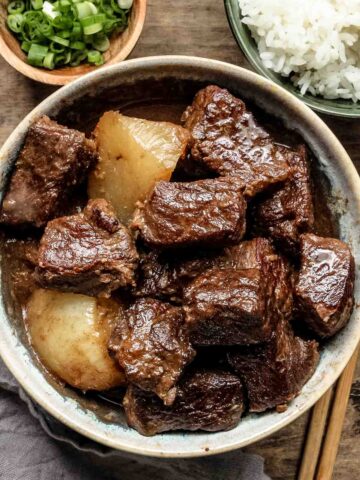
For recipes like Chinese braises or Chinese turnip cake, I always use daikon radishes because they are easily available and relatively inexpensive.
For recipes like kimchi or pickled radishes, where the dish is eaten raw, I like to use Korean radishes (aka Mu) because they are sweeter and have a milder flavor. Unfortunately, they are also quite hard to find, so when I can't find them, I will substitute them with daikon radish.
Korean Radish
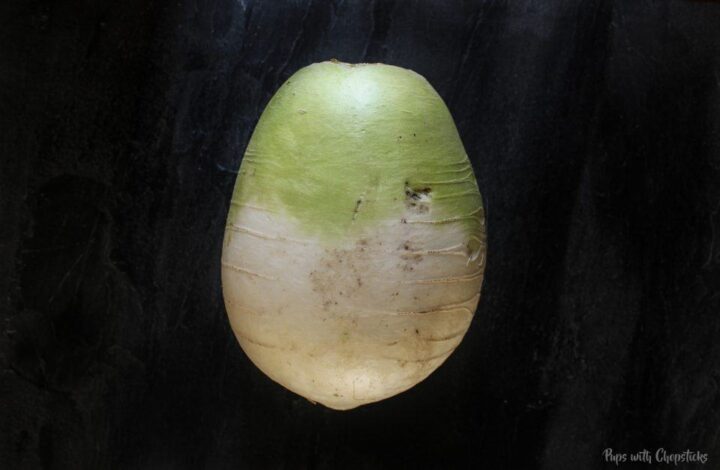
Korean radish is a root vegetable with a dense, crunchy texture and a mild and sweet flavor. It is mainly used in Korean dishes to make salads, pickles, stews, broths, slaws, and kimchi. It should not be confused with its cousin, the daikon radish, which has a stronger, pungent, and sometimes bitter flavor.
You can find these at Korean supermarkets only. When you pick them out, make sure they are smooth-skinned and not bruised. They should have a very firm texture. Try to stay away from soft Korean radishes. Look for the ones that have a bit of green at the top.
Korean radishes should be stored in a crisper drawer, either wrapped in newspaper or covered in a bag with lots of holes in it, to prevent them from drying out and getting soft. Make sure the drawer is well-ventilated as well because too much moisture can cause mold.
Daikon Radish

Daikon radish is a large root vegetable commonly used in Asian cuisines. It can be enjoyed raw or cooked, and it can be used in broths, unique sauces, salads, stews, or as a condiment.
An interesting way to use this raw would be to grate it and put a small amount into soy sauce, transforming plain soy sauce into a flavourful and unique dipping sauce.
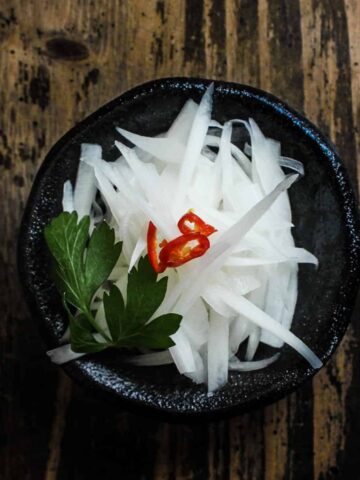
Pickled daikon doesn't require any canning, so it's quick and easy to make and gives a big flavor boost to salads and sandwiches like Banh Mi.
Daikon radishes sometimes have a bitter flavor. The smaller, more tender ones are usually less bitter. To remove the bitterness from daikon radishes, I peel them an extra two or three times. The thicker outer layers of the skin are usually where most of the bitter flavor comes from and are more common in larger, older daikon radishes.
Cooking daikon radishes brings out their sweeter flavors, which is why they are fantastic in hot pot, and Chinese braised stews. They are also fantastic at flavoring brothy soups.
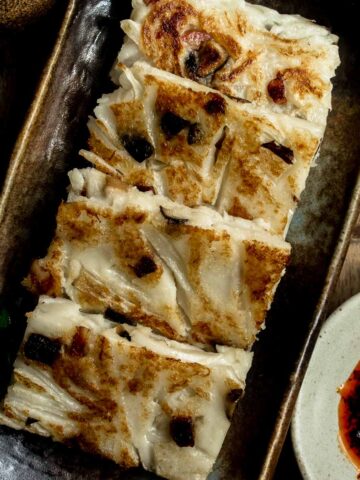
Daikon radish is very commonly used during Chinese New Year to make turnip cake, which is a dish you can also find at dim sum and at Lunar New Year festivals.
You can typically find these at Asian supermarkets, but they have been growing in popularity, and they have also been spotted at local grocery stores as well.
When picking them out at the grocery store, make sure they are smooth-skinned with no cracks, creamy white, and firm. Give them a squeeze; they should feel like an apple. If they are soft and slightly bendy, they are not fresh.
Fun Fact: Raw and leftover cooked daikon radishes smell faintly like farts, like cabbage, but stronger! The smell may be off-putting to some, but rest assured, it's delicious!
They should be stored in the fridge's crisper drawer in plastic bags with holes for good ventilation. If the plastic bag doesn't have holes, make some! The bag needs to breathe and maintain a good amount of humidity to prevent it from drying out.
Recipes That Use Asian Radishes
- Quick & Easy Pickled Daikon Radish
- Chinese Braised Beef Stew
- Chinese Turnip Cake (Lo Bak Go, 萝白糕)
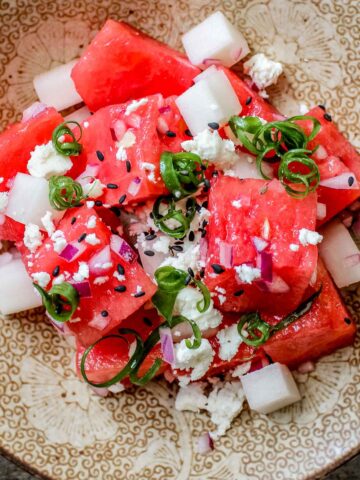
- The Best Watermelon Salad with Feta (Perfect for Summers!)
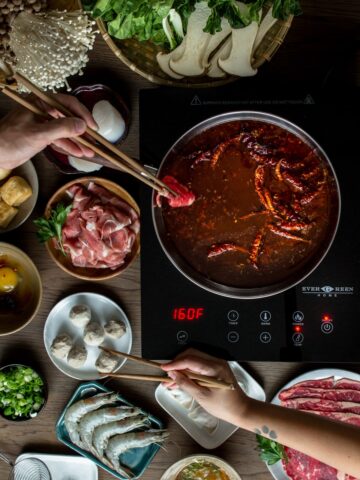
- Ultimate Chinese Hot Pot Guide on How to Hot Pot at Home
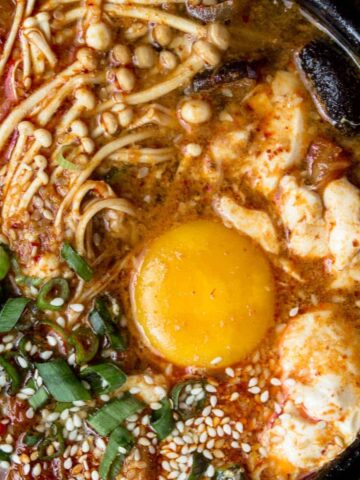
- Easy Soondubu Jjigae Recipe (Spicy Korean Soft Tofu Stew)
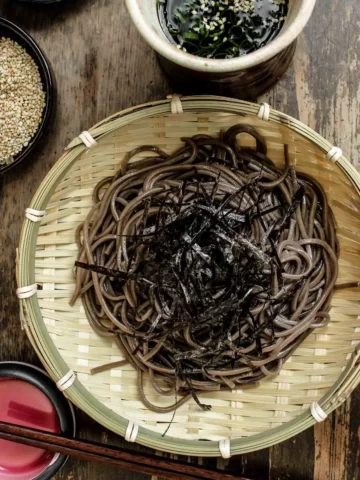
- Easy Cold Soba Noodles (Zaru Soba)


Leave a Reply