

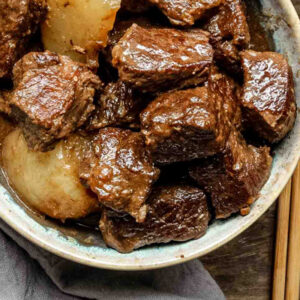
This Chinese braised beef stew with daikon recipe is a hearty dish that features tender chunks of beef and the savory flavors of the star anise braising liquid. With its roots in traditional Chinese cuisine, this stew is a comfort food classic that's perfect for a family dinner or a cozy night in.
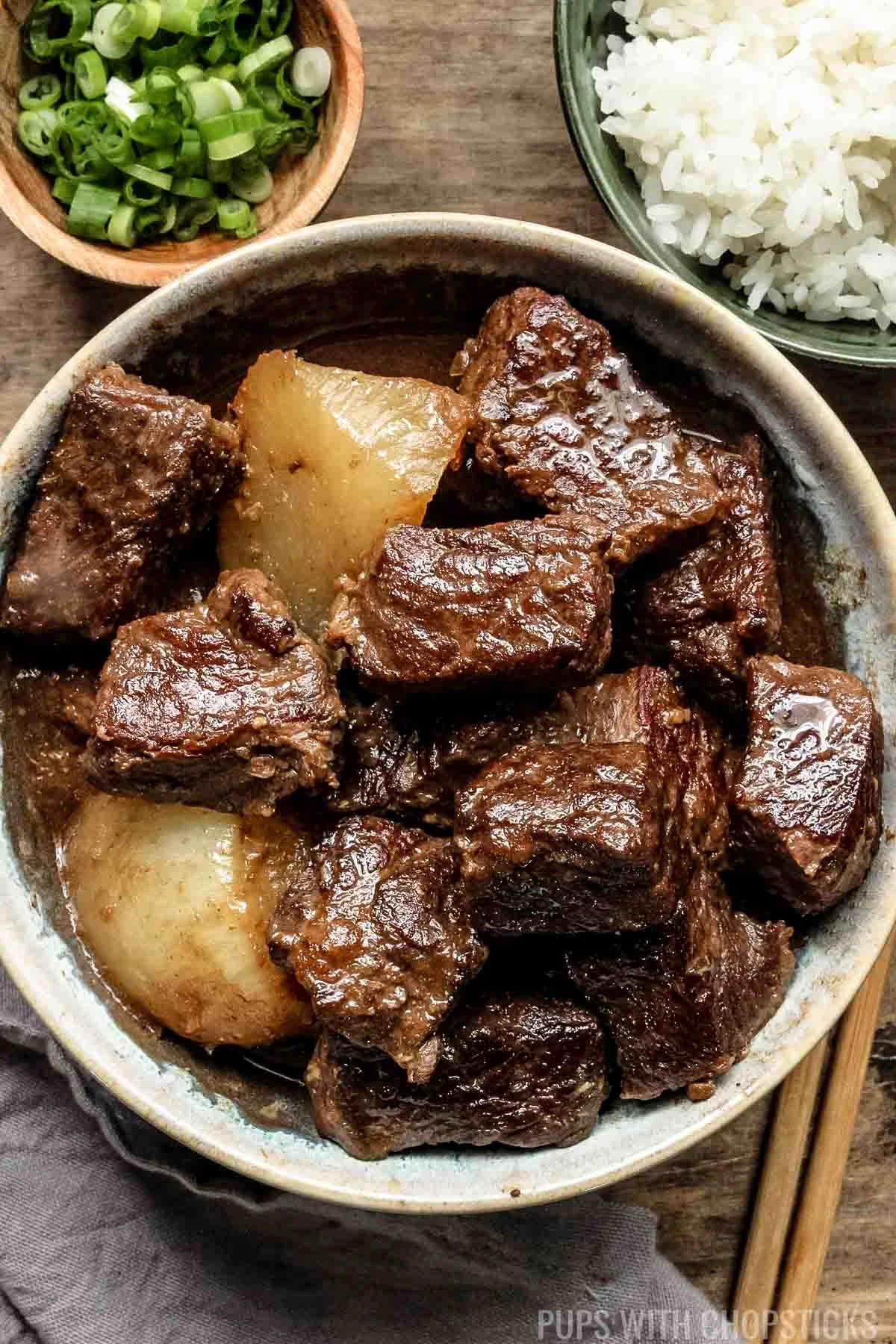
Table of Contents
If you're looking for a Chinese braised beef dish that offers a perfect melt-in-your-mouth texture, a rich, umami flavor, and a warm, comforting bite, then this Chinese beef stew recipe is a must-try. Beef chuck (which is the best cut of beef for stew) is cooked slowly in a savory spiced broth until it's incredibly tender, making every bite a true comfort food.
If you're looking for a more Hong Kong style braised beef stew, this is my version of it! I swap out beef chuck (blade roast) with beef brisket, and cook it slightly longer so that the tough connective tissues break down and become soft and tender.
If you enjoy this Chinese beef stew recipe, you might also want to try other delicious stew recipes such as Chinese Braised Chicken, Vietnamese Beef Stew (Bo Kho), Beer Braised Pork Belly or the Spicy Korean Soft Tofu Stew (Soondubu jjigae).
Why You’ll Love This Recipe
- Incredibly Tender and Moist Beef: I have used many cuts of beef and found that the best cut is chuck (which is also known as top or bottom blade roast). It has an incredibly tender texture with a bit of springiness without the dry, stringiness.
- Authentic, Tried and True Recipe: This Chinese beef stew is my tried and true recipe that I use at home with my family. It has been made many times, and loved by everyone. I even love to use it to make braised pork hocks as well!
- Flavor-Packed and Leftovers Tastes Even Better: This Chinese braised beef stew is the ultimate comfort food with its melt-in-your-mouth beef bursting with the deep, rich flavors of the braising liquid. The best part is this recipe is so simple and easy to make, you'll have a delicious meal on the table in no time, and leftovers tastes even better.
Chinese Beef Stew Ingredients
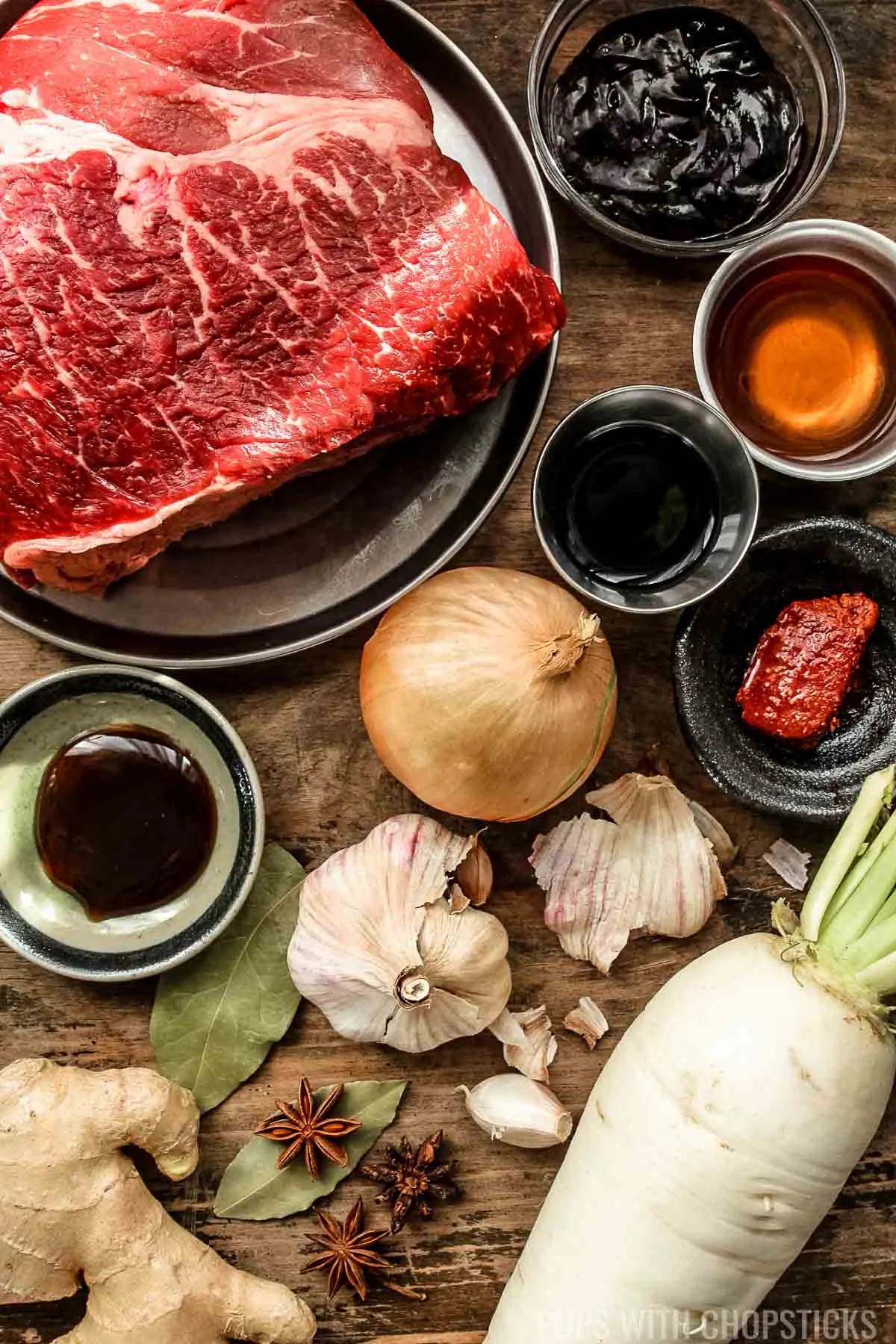
- Beef Chuck (or Brisket): This is star of our Asian beef stew. For the best flavor and tender texture, I always use beef chuck (which is also called top/bottom blade roasts). Once braised, it's tender, moist and has a incredible chew and doesn't have any dry or stringiness to it. When shopping for beef, always look for a nice fat marbling within the beef for the best texture and flavor.
- Red Fermented Bean Curd: To give this beef stew extra umami flavor, I use red fermented bean curd.
- Garlic, Onion (or shallot), and Ginger: This trio of aromatics are key ingredients to infuse the beef with incredibly flavor.
- Cooking Wine: Chinese cooking wine is a key ingredient in many Chinese dishes, including this beef stew. Both Shaoxing and Miju cooking wine will work. It adds a subtle, sweet flavor to the stew. If you don't have it, you can substitute with dry sherry or omit it.
- Star Anise and Bay Leaves: These spices add a warm, five spice flavor to the stew without the use of five spice. Star anise is a must in this braised beef stew and is one of the main flavors to make it delicious. Do not omit it.
- Daikon Radish: When added, this vegetable absorbs the savory braising liquid, adding a subtle, sweet flavor and a tender texture. When shopping for daikon, find a firm daikon. It should not be turgid. The firmer it is, the fresher it is. You can substitute this with carrots, if you cannot find it.
- Braising Liquid: This includes ingredients like hoisin sauce, red fermented bean curd, oyster sauce, soy sauce, dark soy, cooking wine, and water. They come together to form a flavorful broth in which the beef and vegetables are simmered to perfection.
How to Make Chinese Beef Stew
Making this incredible Chinese beef stew recipe at home is super easy and will give you great results every single time. Here's how to make it step by step:
Preparation
(Optional) If Using Tendon, Pressure Cook It: If you're using tendon, it's important to pressure cook it first for 40-45 minutes. This will guarantee that it becomes tender. After pressure cooking, trim off any excess fat.
Prepare the Ginger, and Onions: Slice ginger and set it aside. Peel and slice the onions and set them as aside.
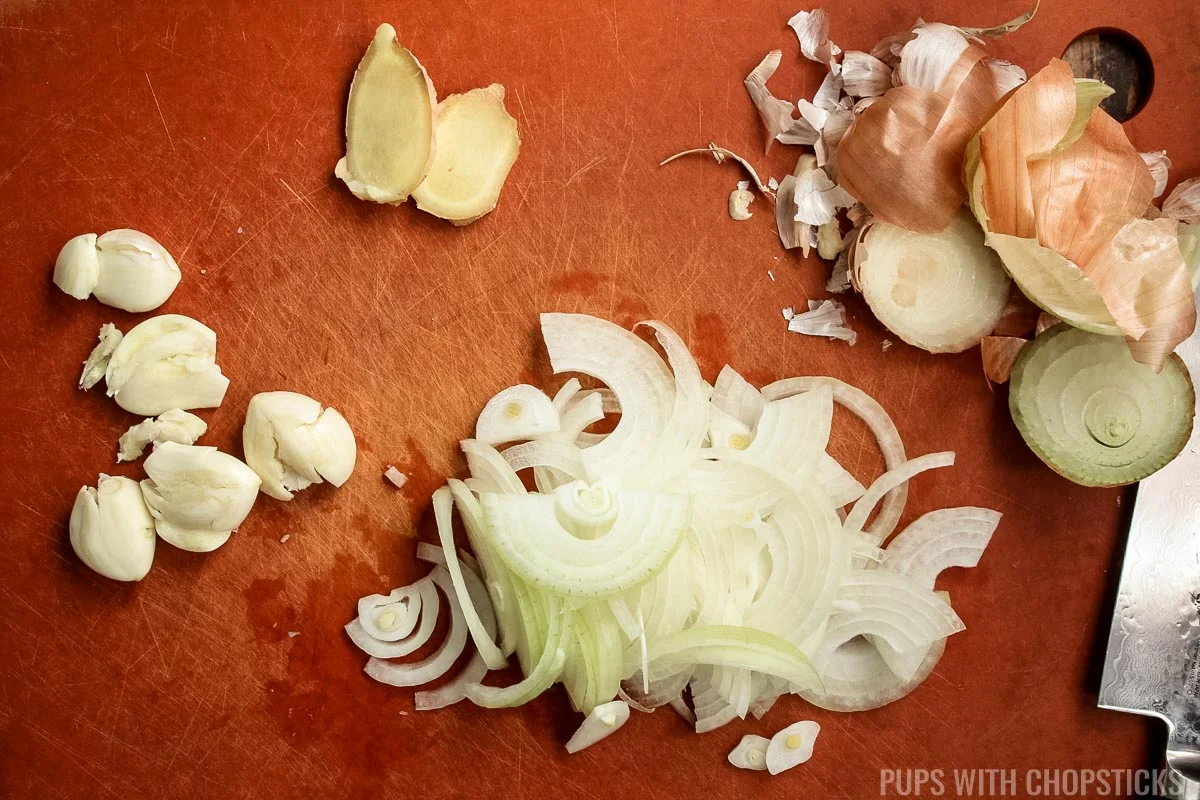
Prepare and Smash Garlic - Peel the garlic, then use the side of the knife to smash it. Keep whole (don't worry they will melt into the sauce when we braise it).
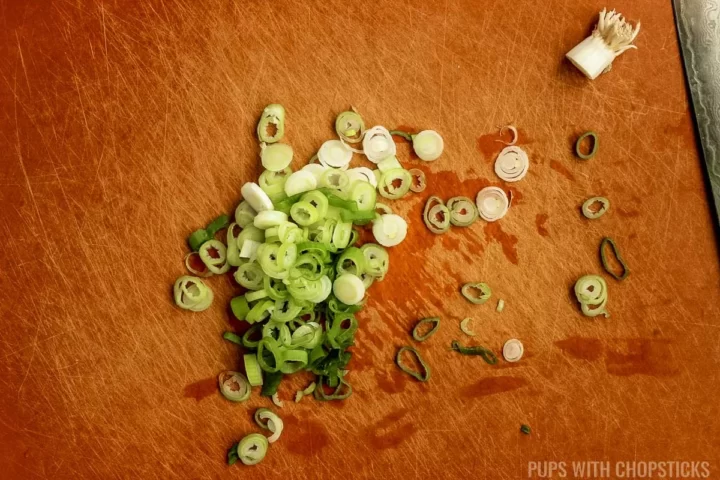
Chop Green Onions: Finely mince the green onions and set them aside for the end.
Prepare Braising Sauce: Mash the fermented bean curd (sometimes they don't fully melt into the stew unless you break it up manually). Then mix in the rest of the braising sauce ingredients (soy, hoisin sauce, oyster sauce Shaoxing wine and dark soy) and mix everything together. Mix in the water (or no sodium beef stock with the sauce and set it aside.)
Prepare the Daikon Radish
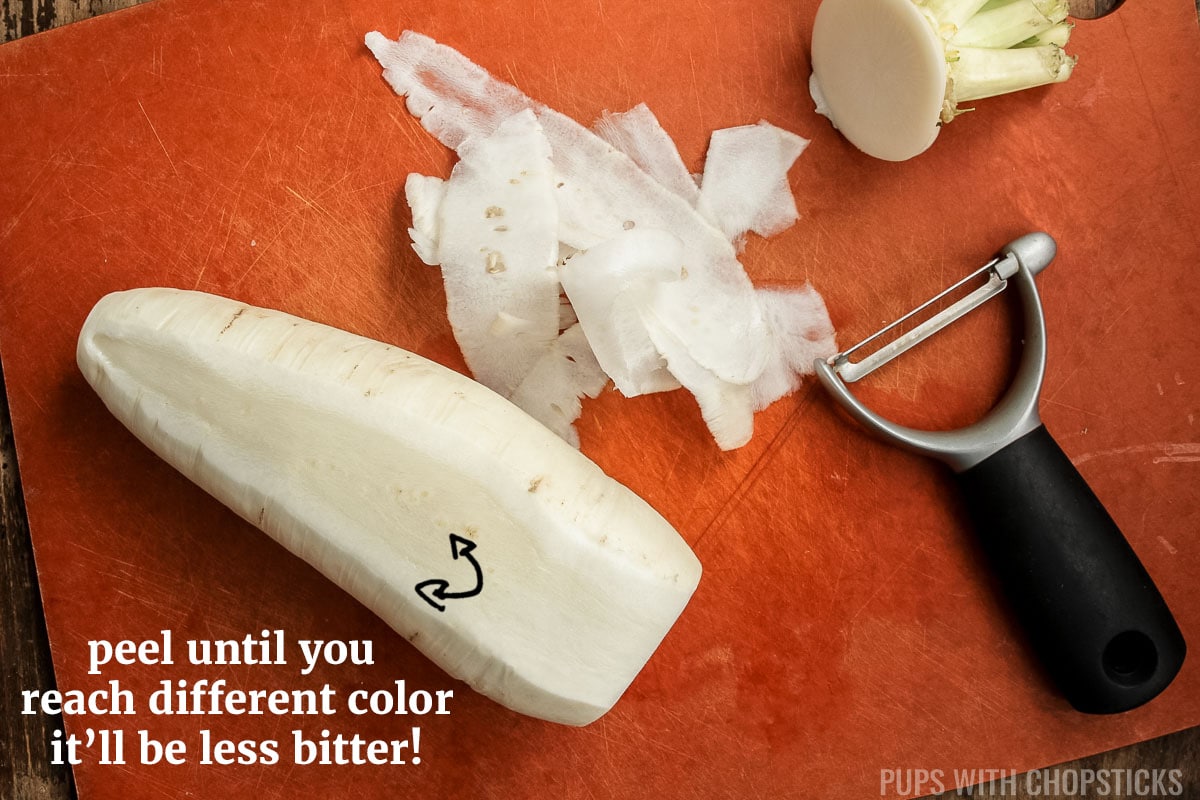
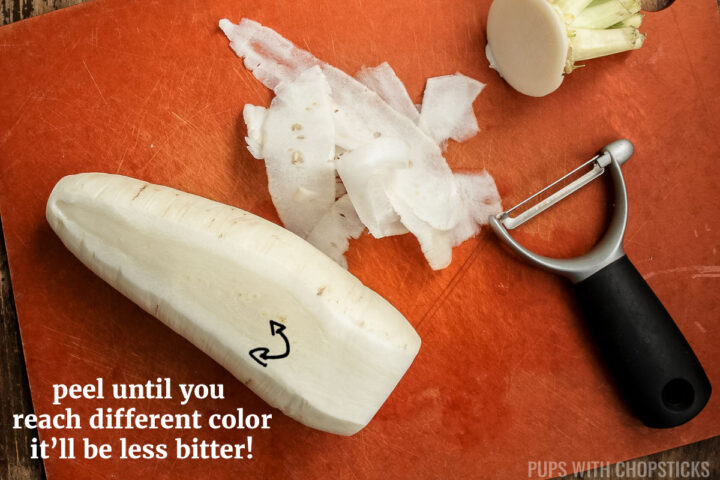
Peel Daikon: To reduce the bitterness of daikon radishes, I peel them a few times until it becomes a different color. The outer layers of the daikon usually contain more of the bitter flavor, so we don't want that to transfer to the stew.
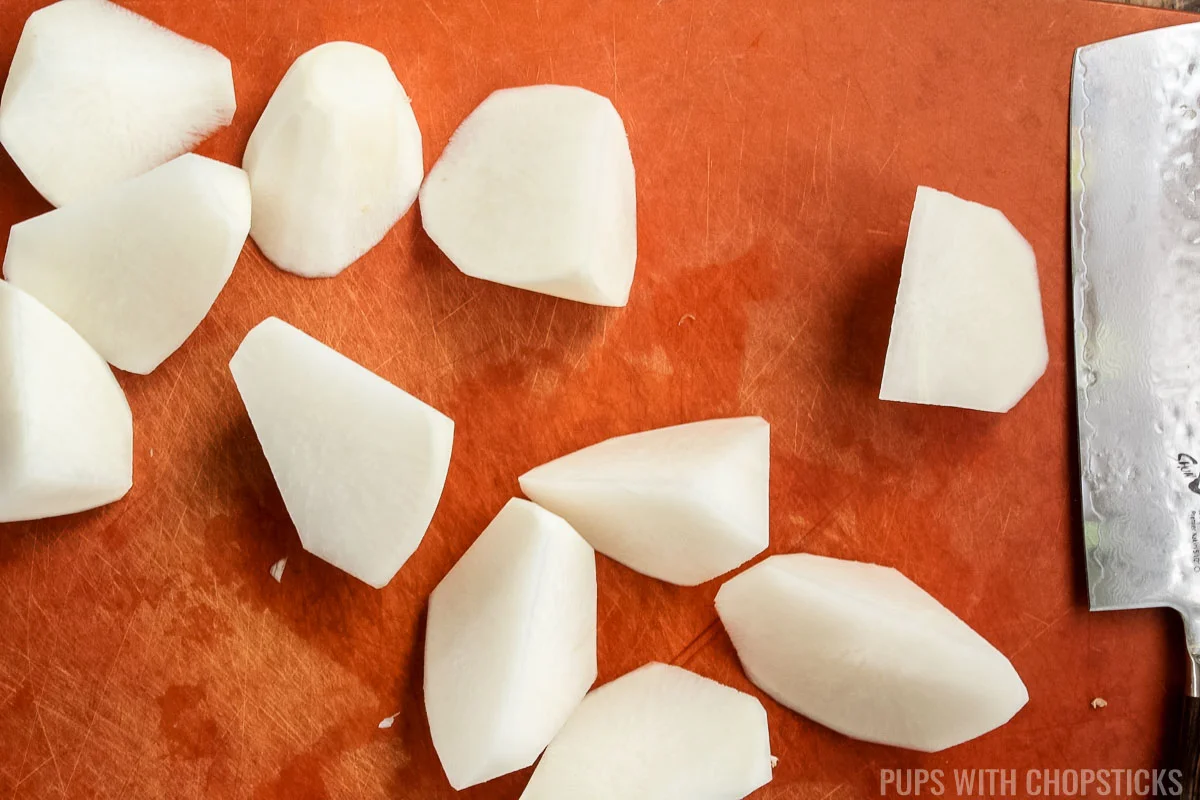
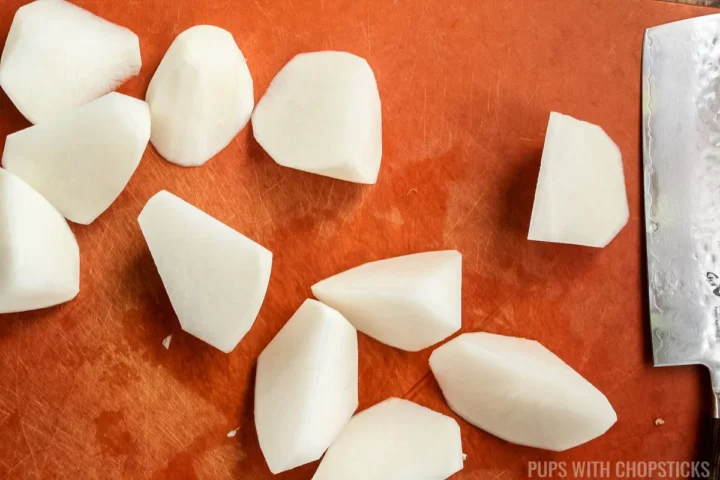
Cut Daikon Into Smaller Pieces: Cut off the tip with the leaves, and discard it. Then cut the daikon into 1½ inch pieces.
Prepare the Beef
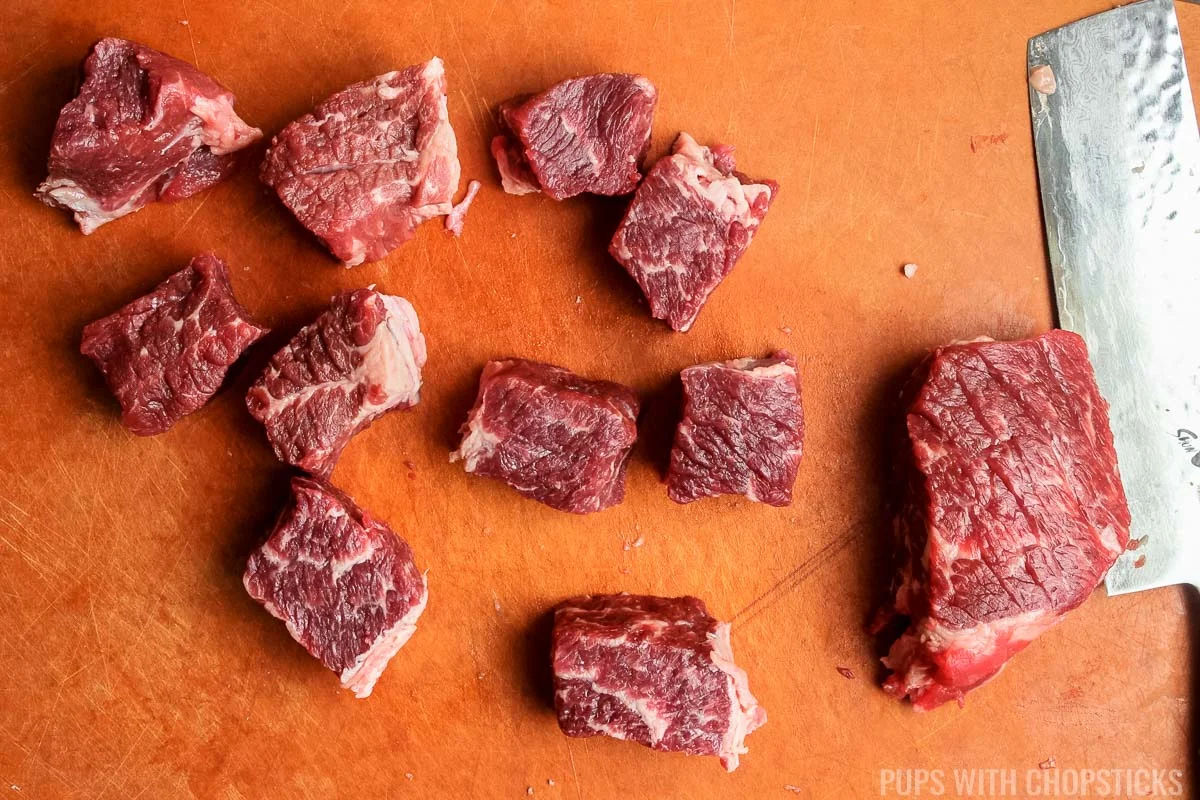
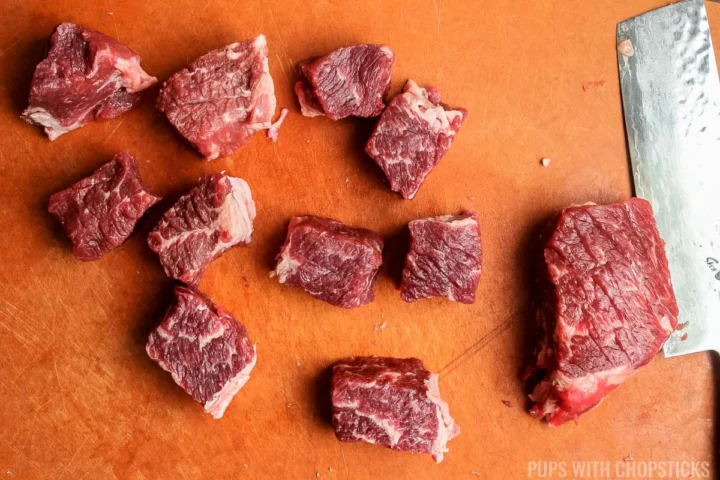
Cut the Beef Into Small Pieces: Cut beef into 1 to 1½ cubes (beef will shrink once cooked)
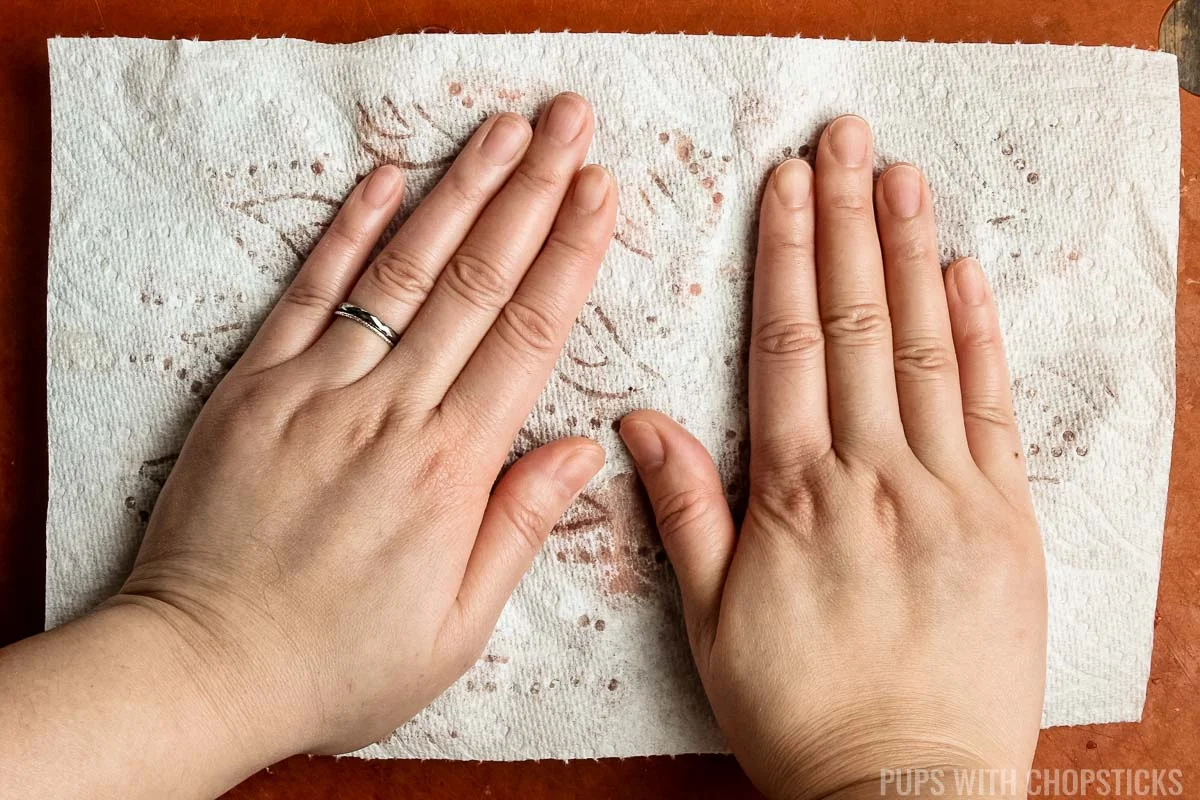
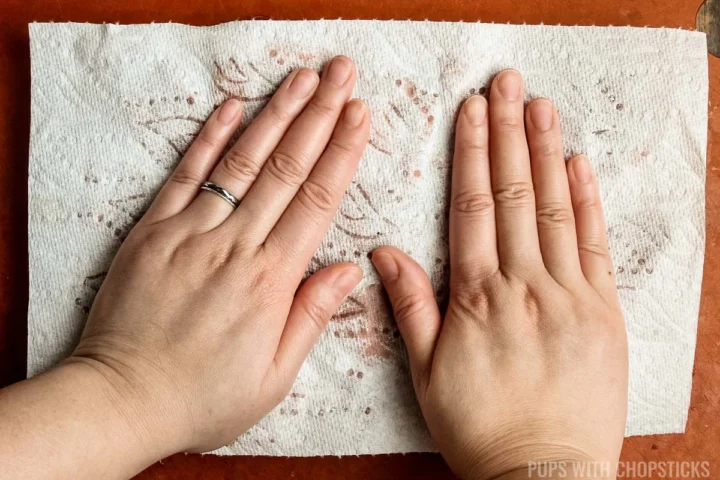
Pat the Beef Dry and Salt: To create a nice browning, pat the beef dry, and sprinkle a bit of salt on it. This will help with the Maillard reaction, which is the browning process, to give the beef stew more flavor.
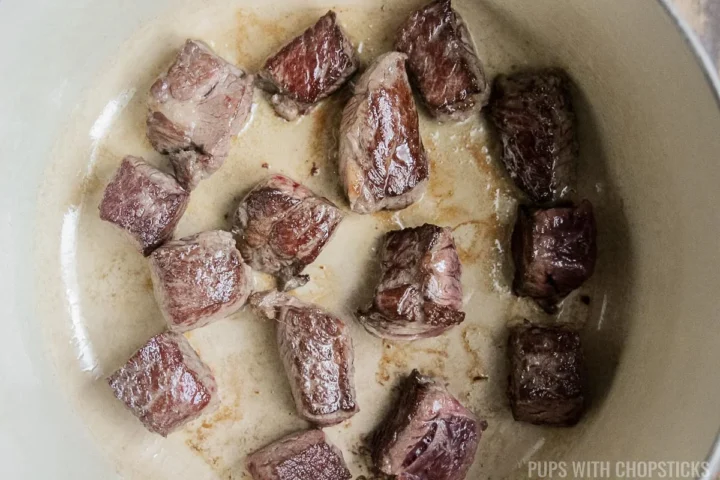
Brown the Beef in a Pan: Set the stove to Medium-High heat. Once the pan is hot, add oil to it (don't be shy with the oil, it will help with the browning and help the beef not stick to the pan). Add the beef in a single layer and brown for about 30 seconds per side. Don't flip it too soon, because it will rip the beef. You want a crust to form before you flip it. To remove it from the pan, I gently push the beef from the bottom of the pan to loosen it. You may need to do this in batches, if you're using a lot of beef.
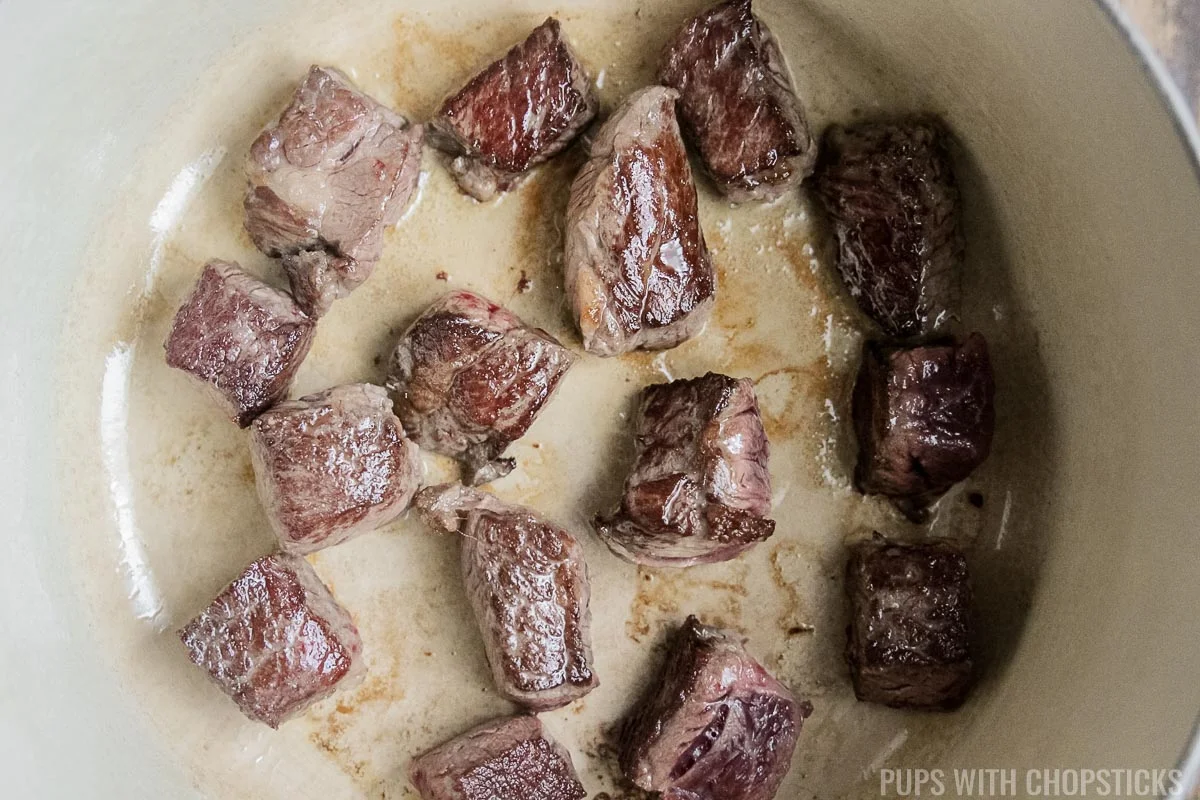
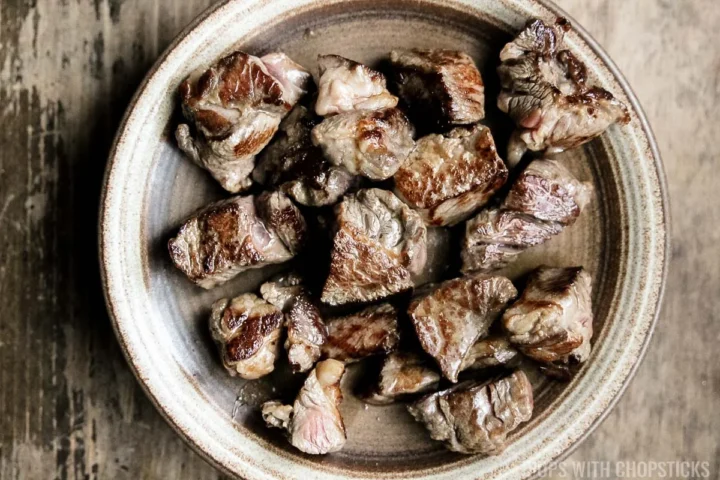
Plate the Beef: Remove the beef from the pot and set it aside for later.
Prepare the Rest of the Braise
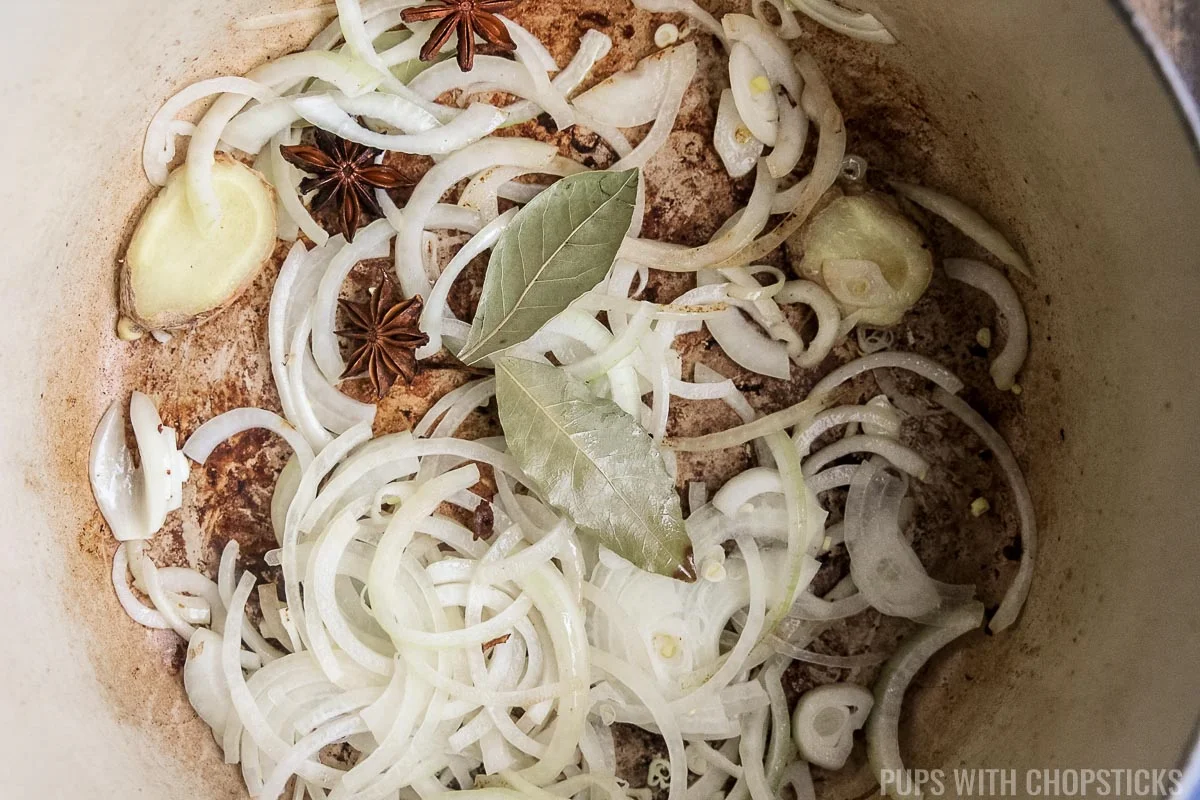
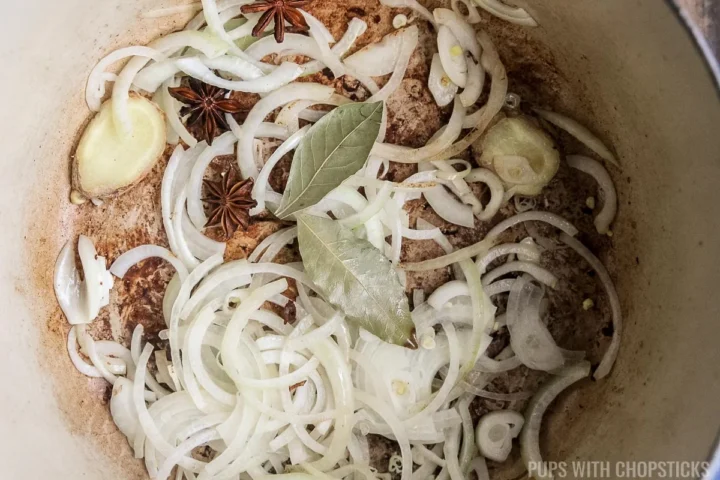
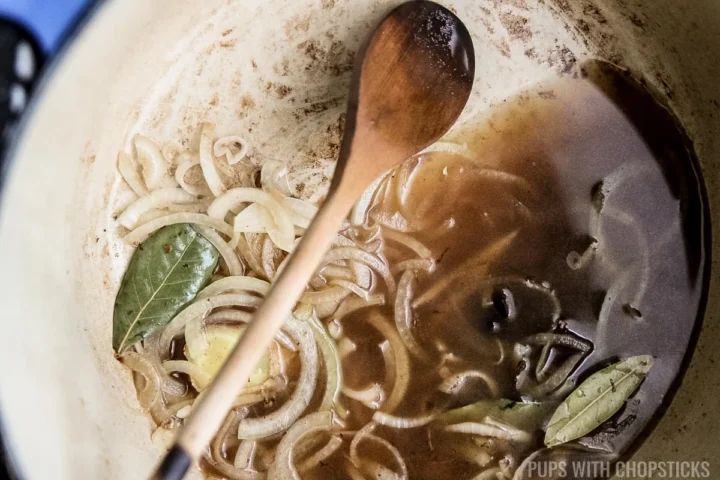
Brown Aromatics: Add the ginger, onions, bay leaves and star anise and brown for 2-3 minutes. Do not add the garlic. It's important that we do not brown the garlic because, it will create a hard shell on the garlic that will prevent them from fully melting into the stew.
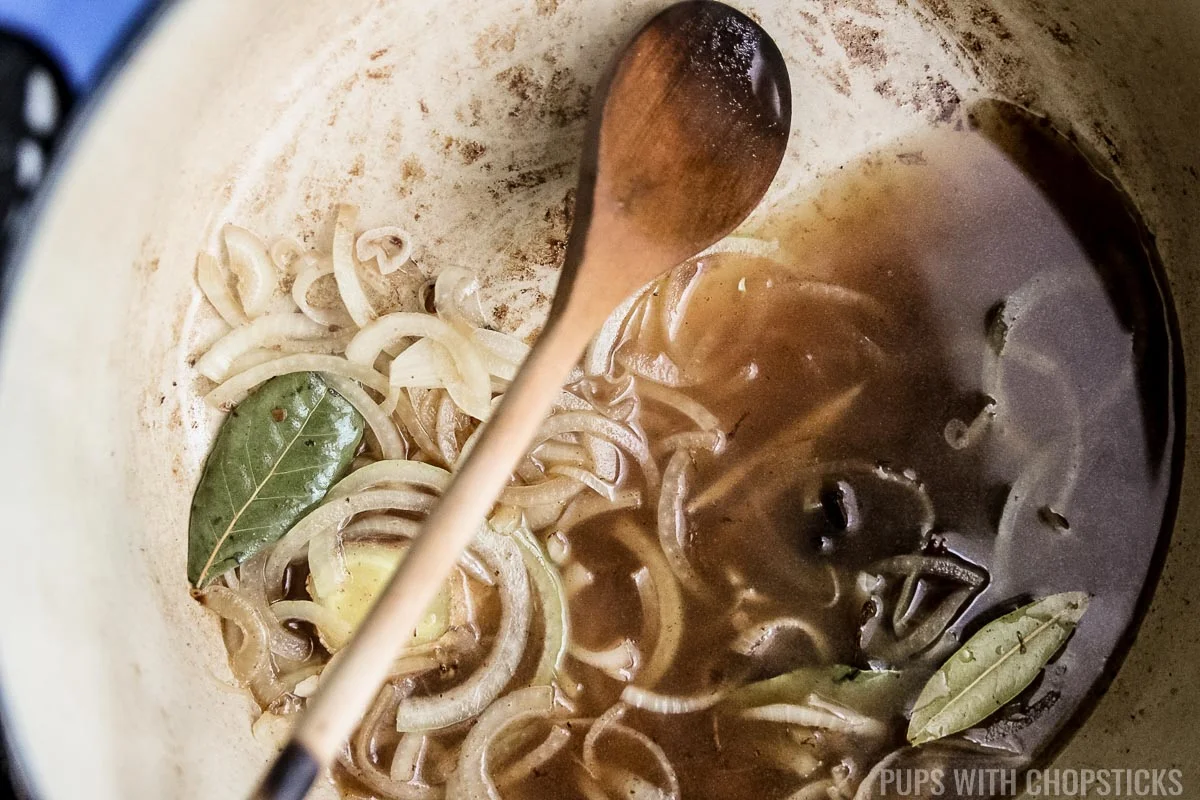
Scrape the Fond From the Bottom of the Pot: Change stove to Medium-Low heat. Add half of the pre-made braising liquid, and use a wooden spoon to scrape the brown bits on the bottom of the pot. These burnt bits are full of flavor, and are called 'Fond'. After you finished scraping the brown bits, add the rest of the braising liquid in the pot.
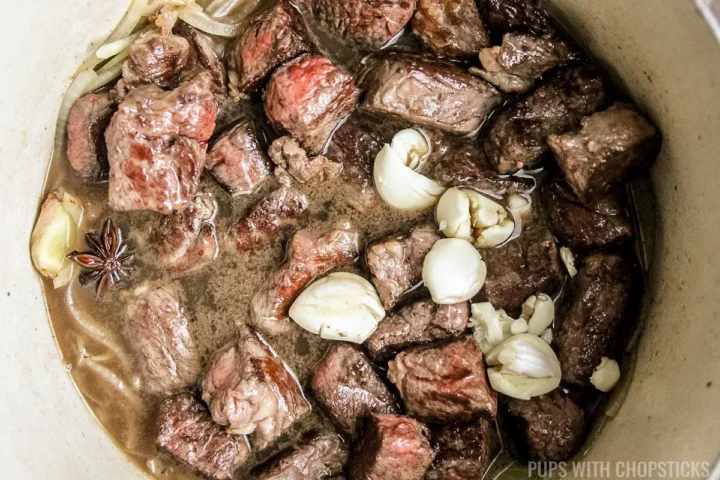
Add the Beef and Garlic: Add the the browned beef and smashed garlic cloves into the pot.
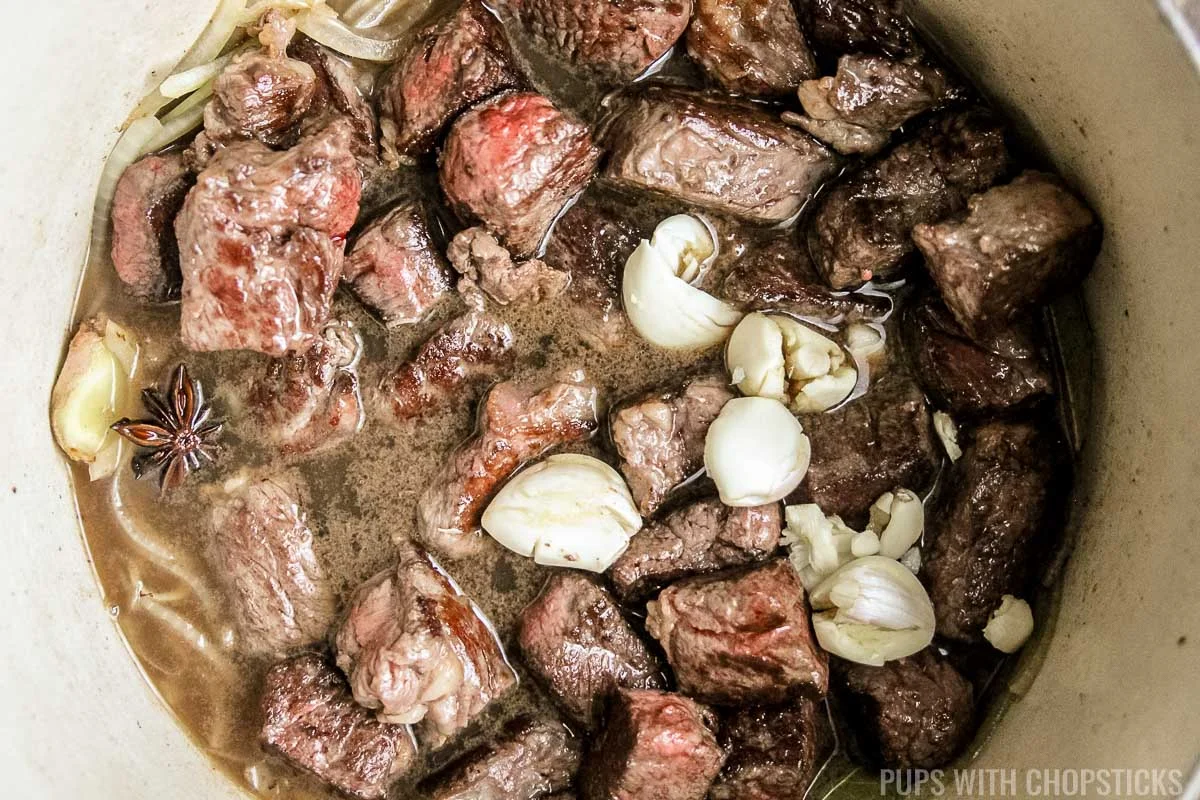
Braise for 60 minutes: Put the lid on, and braise everything for 60 minutes. At 30 minutes, check the water levels to make sure there is still enough liquid in the pot to braise the beef. If the water levels are too low, add about ½ cup of water. (The beef should be halfway submerged in liquid.)
Add the Daikon and Continue to Simmer: Add the daikon (and pressure cooked tendon if you are using) and cook for 30 minutes.
Check Daikon for Doneness: After 30 minutes, poke a daikon with a skewer or knife. It should be soft, and the knife should easily go through it. If it is still hard, add a few more minutes of braising.
Taste Test: Add the green onions in, and stir the stew and let the residual heat wilt it. Do a taste test, if it needs more salt, add it in now.
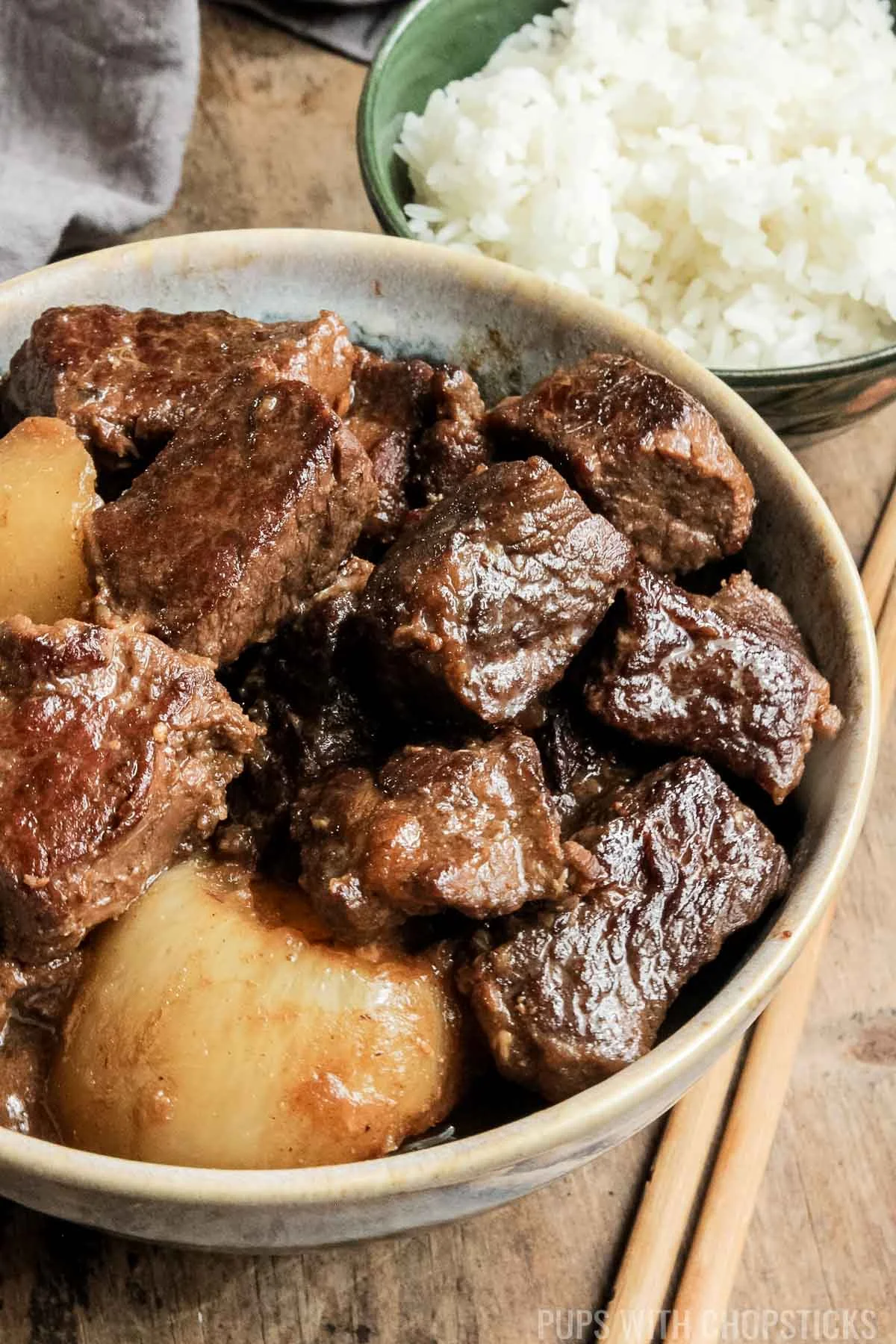
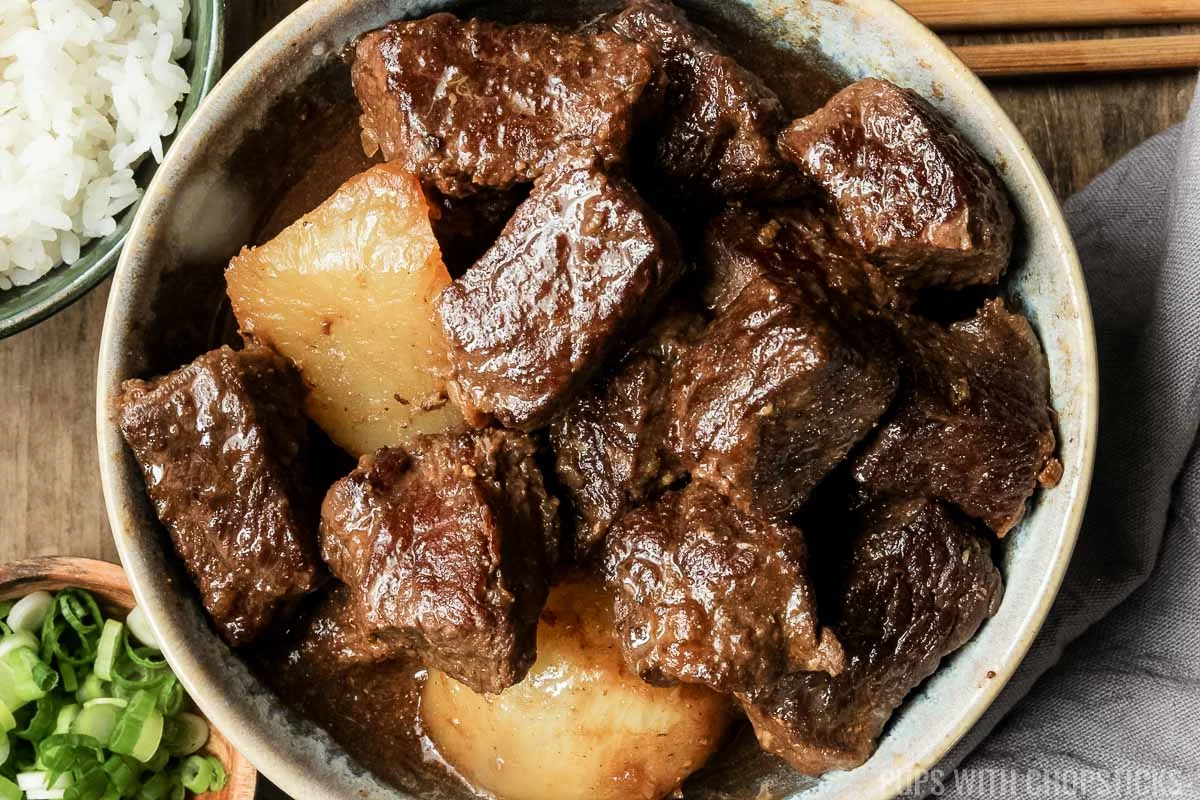
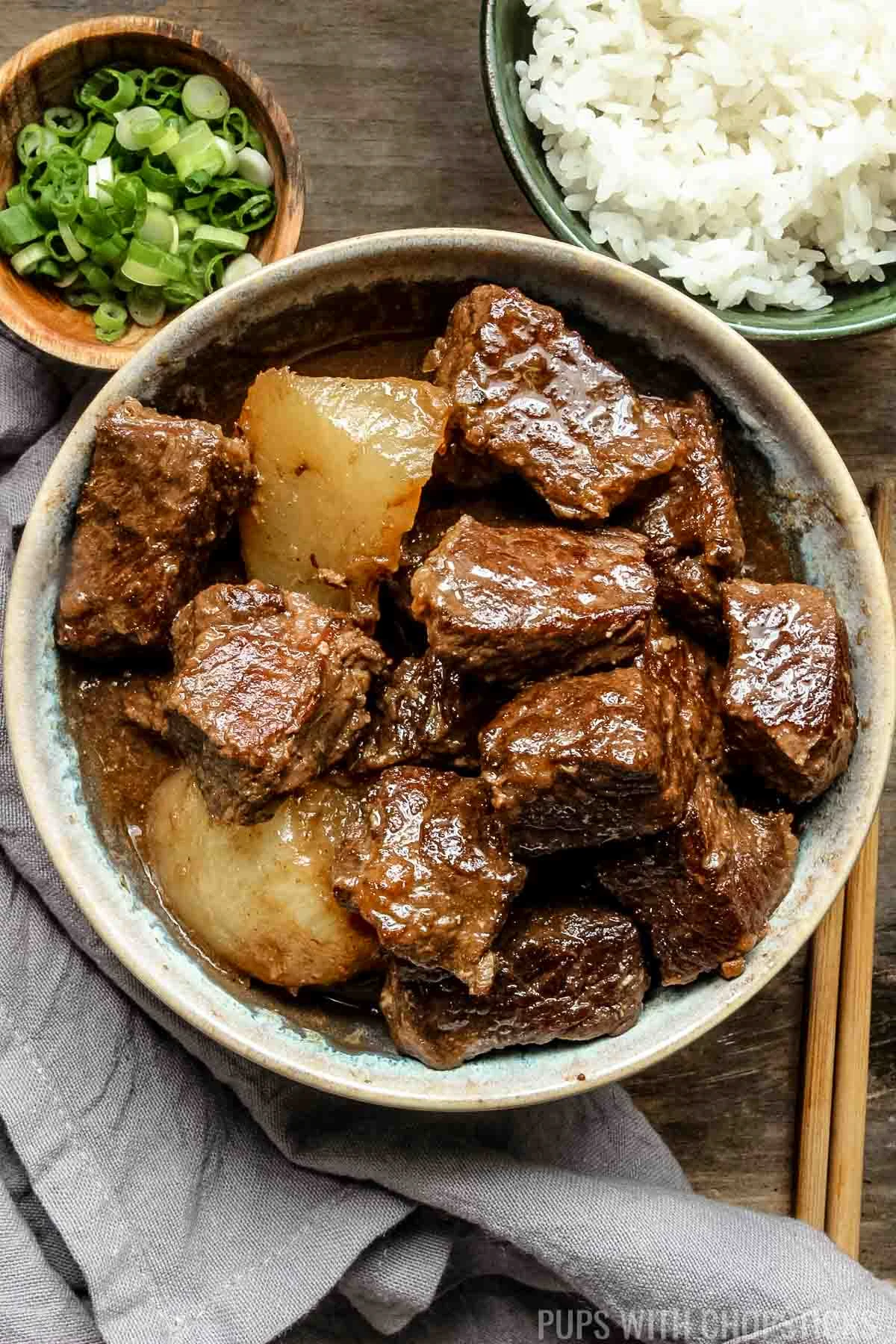
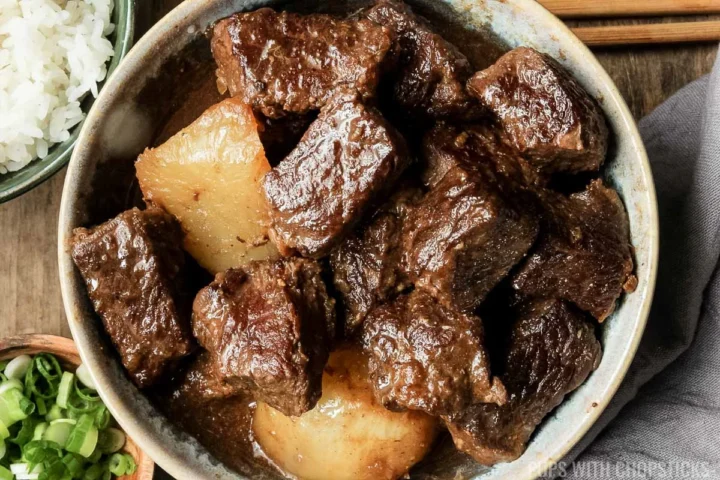
Serve: Your Chinese beef stew is now ready! Serve it with rice or noodles and enjoy the rich, flavorful sauce and tender chunks of beef.
Joyce’s Tips For Making the Best Chinese Beef Stew
- Choose the Right Cut of Beef: For this Chinese beef stew recipe, I always use beef chuck, which are also called blade roasts. These cuts are perfect for stews as they become tender and flavorful when cooked low and slow. Look for beef with a good fat to meat marbling ratio, this will give you the most flavor and texture. Alternatively, you can also use beef brisket as well, but you may need to cook it longer (and add more water to the braise) to break down the tough and chewy connective tissues. It's very important you don't use generic 'stewing beef' from the grocery store, because those tend to produce dry and stringy beef stew.
- How To Pick Daikon Radish: When shopping for daikon, you want to pick the ones that are smooth and not blemished, but most importantly heavy for it's size and firm. This means the daikon is fresh because there's still a lot of water in it. Give it a squeeze, make sure it's not soft or turgid. It should feel firm like a potato.
- How to Remove Bitterness from Daikon: To ensure that your daikon doesn't have any bitterness (which can transfer to your beef stew), peel your daikon a few times until it has changed to a different color. The outer layers of the daikon, is where the bitter flavor usually comes from, and the more tender deeper layers are sweeter.

- Always Scrape Off the 'Fond' for Best Flavor: While you are browning your meat, you will notice that there will be brown bits on the bottom of our pan. This is flavor, and called 'Fond'. Adding 1 cup of liquid will loosen it up, which will make it easier for you to scrape up to give your stew additional flavor!
- Beef Tendon Needs Pressure Cooking: If you're using beef tendon (which is optional), make sure to pressure cook it for 40-45 minutes before adding it to the stew. This will ensure that the tendon becomes tender and doesn't require an excessively long braise time.
- Browning the Beef For Best Flavor: To get the best flavor, it's important to brown your beef before you braise it. The best way to do it is to blot out as much moisture out of the meat and then salt it before you add it to hot oil. Usually the salt draws out more moisture in meat but in this case, if you brown it right after salting, it actually helps with the Maillard reaction, and makes the beef not stick to the pan as much. Just make sure not to touch the beef right away once it's in the oil. You want it to form a crust which will take a few seconds, before you flip it.
- How To Use Extra Red Fermented Bean Curd: If you don't know what to do with the leftover jar of red fermented bean curd, you can also make authentic char siu with it! The red in the sauce is what will help give your char siu it's red color without food coloring.
Serving Suggestions
- This Chinese beef stew is a hearty and flavorful dish that pairs perfectly with a bowl of steamed rice with a side of chili oil. The tender chunks of beef and daikon radish absorb the rich, savory sauce, making it a satisfying meal on its own. Alternatively, you can also serve it with a simple egg fried rice, chicken fried rice, yeung chow fried rice or garlic fried rice (sinangag).
- For a traditional Chinese twist, serve this beef stew with a side of noodles. The soft, slippery noodles contrast beautifully with the tender beef, providing a different texture and a filling, comforting dining option. I like to use udon noodles or knife cut noodles for this.
- If you're a fan of bread, why not pair this Chinese beef stew with some crusty bread or dinner rolls? The hearty, robust flavors of the stew are wonderfully complimented by the light, fluffy bread, making it a perfect option for a cozy family dinner.
- For a lighter, more refreshing option, serve this beef stew with a side of steamed or stir-fried greens like ginger soy cabbage. The tender, flavorful vegetables are a great counterpoint to the rich, savory stew, providing a well-balanced and nutritious meal.
Recipe Variation Ideas
- Hong Kong style Braised Brisket with Tendon - To get the Hong Kong style brisket, swap out the chuck with brisket. You will have to braise it slightly longer until the tough and chewy connective tissues break down and get soft and tender but you can also use a pressure cooker to make this faster. If you want to add tendon, you must pressure cook it for about 40 minutes first to get the best texture.
- Braised Pork Hocks - This braising liquid is absolutely delicious with pork hocks as well. Just make sure you ask your butcher to cut the pork hocks into smaller 2 inch pieces so that it cooks more evenly and quickly.
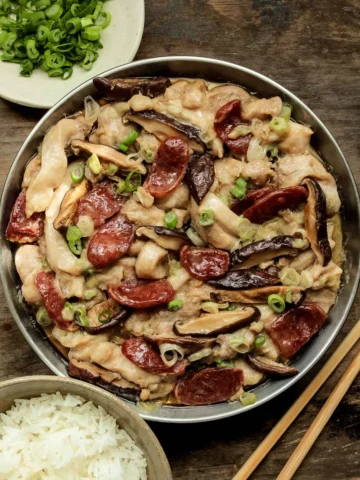
- Chicken: If you're out of beef or prefer chicken, you can easily substitute the beef with chicken, you will need to adjust the braising time to 30 minutes instead of 1 and ½ hours, to ensure the chicken doesn't dry out. The chicken will still become tender and flavorful in the savory broth. This variation is a great option for those who want to try a different meat in this traditional Chinese dish or want make something more quick and easy.
Frequently Asked Questions
The ideal cut of beef for this recipe is beef chuck or brisket. These cuts have the perfect amount of marbling and connective tissue, which will make the beef tender and flavorful as it simmers in the stew.
Yes, if you don't have hoisin sauce, you can substitute it with a mix of oyster sauce, soy sauce, and a bit of honey or sugar. This will give a similar sweet and salty flavor to the stew.
You can add a variety of vegetables to this stew to make it more hearty. Carrots, potatoes, and turnips all work well. Just make sure to cut them into large chunks so they don't overcook and become mushy.
Storing and Reheating
- Refrigerating: After enjoying this delicious Chinese beef stew, you can store any leftovers in an airtight sealed container in the refrigerator. The stew will stay fresh for up to 3 days.
- Reheating: When you're ready to enjoy the stew again, thaw it overnight in the refrigerator. Reheat it in a saucepan over medium heat, stirring occasionally, until it's heated through. Remember, the longer the stew stays in the freezer, the more the texture of the vegetables and meat might change.
- Freezing: If you want to freeze the stew, make sure it has cooled to room temperature before placing it in a freezer-safe container. The stew can be frozen for up to 3 months.
More Chinese Home Cooking Recipes You May Like
- Easy Chinese Steamed Chicken Recipe
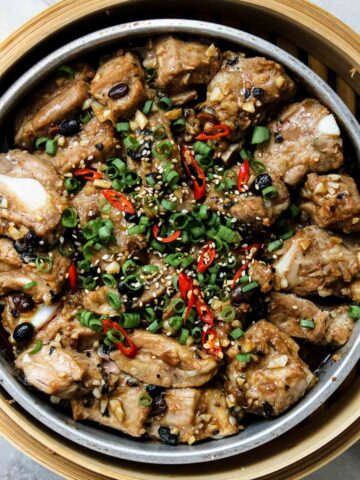
- Steamed Spare Ribs with Black Bean Sauce
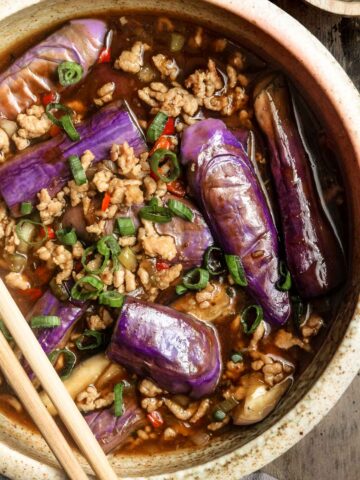
- Chinese Eggplant with Garlic Sauce (鱼香茄子)
- Chinese Tomato Egg Stir-Fry 番茄炒蛋 (Authentic Easy Recipe)
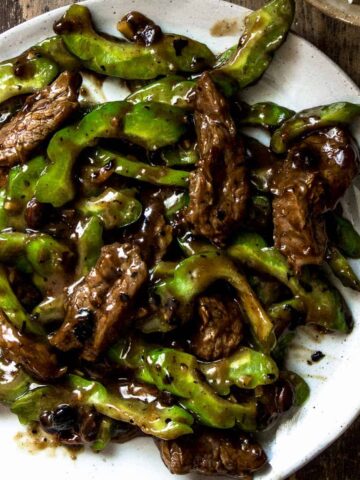
- Stir Fried Bitter Melon with Beef and Black Bean Sauce
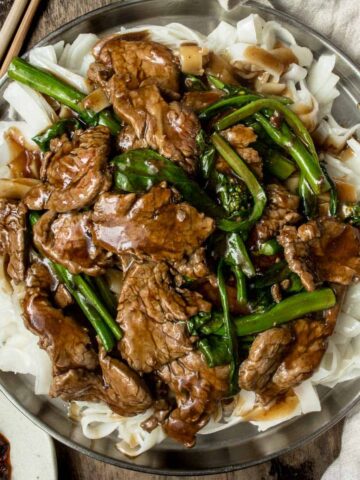
- Saucy Beef Chow Ho Fun with Gravy (菜遠牛河)
- How to Make Chicken Congee (鸡粥)
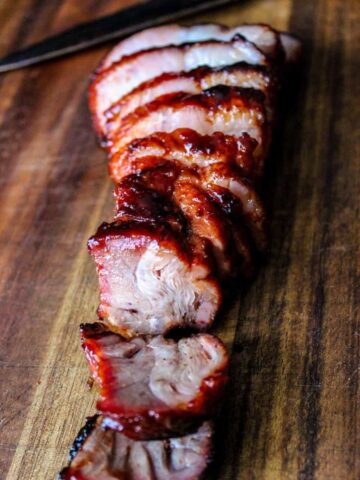
- Sweet and Sticky Char Siu (Chinese BBQ Pork)
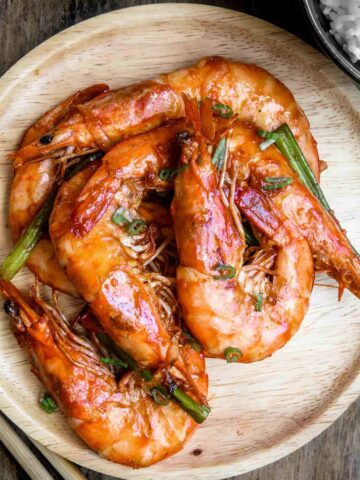
- Chinese Stir-Fried Shrimp (Classic Ketchup Shrimp Recipe)
- Chinese Scrambled Eggs and Shrimp



If you made this Chinese beef stew recipe, I want to see! Follow Pups with Chopsticks on Instagram, snap a photo, and tag and hashtag it with @pupswithchopsticks and #pupswithchopsticks. I love to know what you are making!
Please also consider leaving a ⭐⭐⭐⭐⭐ rating and a comment to tell me how it went! I'd love to hear from you if you made this!
If you like my recipes and want to be updated on when new ones come out, please consider subscribing to my newsletter (we don't spam) and follow along on Instagram, Facebook, and Pinterest for all of my latest recipes!
Recipe Card
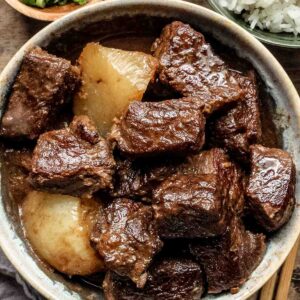
Chinese Beef Stew
Joyce's Recipe Notes
-
- Choose the Right Cut of Beef: For this Chinese beef stew recipe, I always use beef chuck, which are also called blade roasts. These cuts are perfect for stews as they become tender and flavorful when cooked low and slow. Look for beef with a good fat to meat marbling ratio, this will give you the most flavor and texture. Alternatively, you can also use beef brisket as well, but you may need to cook it longer (and add more water to the braise) to break down the tough and chewy connective tissues. It's very important you don't use generic 'stewing beef' from the grocery store, because those tend to produce dry and stringy beef stew.
-
- How To Pick Daikon Radish: When shopping for daikon, you want to pick the ones that are smooth and not blemished, but most importantly heavy for it's size and firm. This means the daikon is fresh because there's still a lot of water in it. Give it a squeeze, make sure it's not soft or turgid. It should feel firm like a potato.
-
- How to Remove Bitterness from Daikon: To ensure that your daikon doesn't have any bitterness (which can transfer to your beef stew), peel your daikon a few times until it has changed to a different color. The outer layers of the daikon, is where the bitter flavor usually comes from, and the more tender deeper layers are sweeter.
-
- Always Scrape Off the 'Fond' for Best Flavor: While you are browning your meat, you will notice that there will be brown bits on the bottom of our pan. This is flavor, and called 'Fond'. Adding 1 cup of liquid will loosen it up, which will make it easier for you to scrape up to give your stew additional flavor!
-
- Beef Tendon Needs Pressure Cooking: If you're using beef tendon (which is optional), make sure to pressure cook it for 40-45 minutes before adding it to the stew. This will ensure that the tendon becomes tender and doesn't require an excessively long braise time.
-
- Browning the Beef For Best Flavor: To get the best flavor, it's important to brown your beef before you braise it. The best way to do it is to blot out as much moisture out of the meat and then salt it before you add it to hot oil. Usually the salt draws out more moisture in meat but in this case, if you brown it right after salting, it actually helps with the Maillard reaction, and makes the beef not stick to the pan as much. Just make sure not to touch the beef right away once it's in the oil. You want it to form a crust which will take a few seconds, before you flip it.
-
- How To Use Extra Red Fermented Bean Curd: If you don't know what to do with the leftover jar of red fermented bean curd, you can also make authentic char siu with it! The red in the sauce is what will help give your char siu it's red color without food coloring.
Ingredients
- 2 lbs beef chuck (1000g, aka. blade roast)
- 1 onion (approx. ½ cup)
- ½ bulb garlic (approx. 5 cloves, ¼ cup)
- 2 slices ginger
- 3 star anise
- 2 bay leaves
- 2 stalks green onion
- 1 small daikon radish (optional. approx. 1½ cups. Can sub for carrots.)
Braising Sauce
- 4 tablespoons hoisin sauce
- 1 cube red fermented bean curd (approx. 1 tablespoon)
- 2 tablespoons oyster sauce
- 2 tablespoons soy sauce
- 2 tablespoons Shaoxing wine
- 2½ cups water (or enough to just cover the beef. Can sub for no sodium beef broth)
- 1 teaspoon dark soy sauce (optional, for color)
Instructions
Preparation
- (Optional) If you're using tendon, it's essential to pressure cook it first for 40-45 minutes. This will guarantee that it becomes tender. After pressure cooking, trim off any excess fat.
- Slice 2 slices ginger and set it aside. Peel and slice 1 onion and set them aside for later.
- Peel ½ bulb garlic (approx. 5 cloves), then use the side of the knife to smash it. Keep whole (don't worry, they will melt into the sauce when we braise it).

- Finely mince 2 stalks green onion and set them aside for the end.
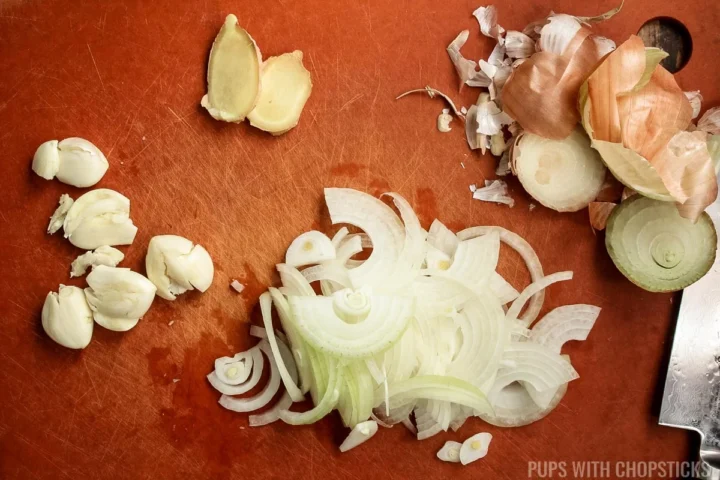
Prepare the Braising Sauce
- In a small bowl, mash 1 cube red fermented bean curd to break it up into small pieces. (sometimes they don't fully melt into the stew unless you break it up manually).
- Then mix in 4 tablespoons hoisin sauce, 2 tablespoons oyster sauce, 2 tablespoons soy sauce, 2 tablespoons Shaoxing wine, and 1 teaspoon dark soy sauce (or reg. soy sauce).
- Once the sauce is mixed, mix in 2½ cups water to it.
Prepare the Daikon Radish
- Peel 1 small daikon radish. To reduce the bitterness of daikon radishes, I peel them a few times until I reach the beige part. The outer layers of the daikon usually contain a more bitter flavor, so we don't want that to transfer to the stew.
- Cut off the tip with the leaves, and discard it. Then cut the daikon into 1½ inch pieces.
Prepare the Beef
- Cut 2 lbs beef chuck into 1 to 1½-inch cubes.
- To create a nice browning, pat the beef dry, and sprinkle a bit of salt on it. This will help with the Maillard reaction, which is the browning process, to give the beef stew more flavor.
- Set the stove to Medium-High heat. Once the pan is hot, add oil to it (don't be shy with the oil, it will help with the browning and help the beef not stick to the pan). Add the beef in a single layer and brown for about 30 seconds per side. Don't flip it too soon, because it will rip the beef. You want a crust to form before you flip it. To remove it from the pan, I gently push the beef from the bottom of the pan to loosen it. You may need to do this in batches, if you're using a lot of beef.
- Remove the beef from the pot and set it aside for later.
Prepare the Rest of the Braise
- Add the sliced ginger, sliced onions, 2 bay leaves, and 3 star anise and brown for 2-3 minutes. Do not add the garlic. It's important that we do not brown the garlic, as it will create a hard shell that will prevent it from fully melting into the stew.
- Change stove to Medium-Low heat.
- Add half of the braising sauce to the pot, and use a wooden spoon to scrape the brown bits on the bottom of the pot. These burnt bits are full of flavor, and are called 'Fond'. Once you have scraped most of the brown bits, add the rest of the braising sauce to the pot.
- Add the browned beef, and the smashed garlic cloves to the pot and mix everything together.
- Put the lid on, and braise everything for 60 minutes. At 30 minutes, check the water levels to make sure there is still enough liquid in the pot to braise the beef. If the water levels are too low, add about ½ cup of water. (The beef should be halfway submerged in liquid.)
- Add the daikon (and pressure cooked tendon if you are using) and cook for 30 minutes.
- After 30 minutes, poke a daikon with a skewer or knife. It should be soft, and the knife should easily go through it. If it is still hard, add a few more minutes of braising.
- Add the green onions in, and stir the stew and let the residual heat wilt it. Do a taste test, if it needs more salt, add it in now.
- Your Chinese beef stew is now ready! Serve it with rice or noodles and enjoy the rich, flavorful sauce and tender chunks of beef.
Nutrition
*Nutritional information is calculated using online tools and is an estimate*
Disclaimer: We are a participant in the Amazon Services LLC Associates Program, an affiliate advertising program designed to provide a means for us to earn fees by linking to Amazon.com and affiliated sites, however I provide these links to make items easier to find if you cannot purchase this locally and I would never recommend anything I don’t own myself or highly recommend. I would prefer you buy your items locally if possible to support your local shops (and chances are they are cheaper locally as well!)


MeL says
Can I cook this using a pressure cooker instead of braising it on the stove to shorten the cooking time? If yes, how long in the pressure cooker?
Joyce Lee says
Hi MeL!
I haven't tried using a pressure cooker for this, so I'm not sure but I honestly don't see why it wouldn't work. The only thing I would worry about is your daikon radish might come out very soggy and break down too much in the pressure cooker.
Sorry I couldn't be more help! Next time I try this in a pressure cooker, I'll update this!
suli says
tried this recipe for the first time. the flavor is just right and not too strong. excellent change from my other beef stews which use similar ingredients but different ratio. i think my boys would love it.
Mimi Yang says
Absolutely delicious !!!
Joyce Lee says
Hi Mimi!
I'm so happy you liked it! It's my favourite comfort food! 🙂
gafaw says
Delicious! Loved it!
Joyce Lee says
Hi Gafaw!
So happy you liked this cozy dish! 🙂