


If you’re looking for an authentic Tom Yum Soup recipe that will give you classic flavors easily at home, then this is the one for you! This Thai hot and sour soup is easy, flavorful, and incredibly comforting. Plus, my recipe is super simple to follow, and I’ve included ingredient tips to help make sure you can easily make this soup at home.
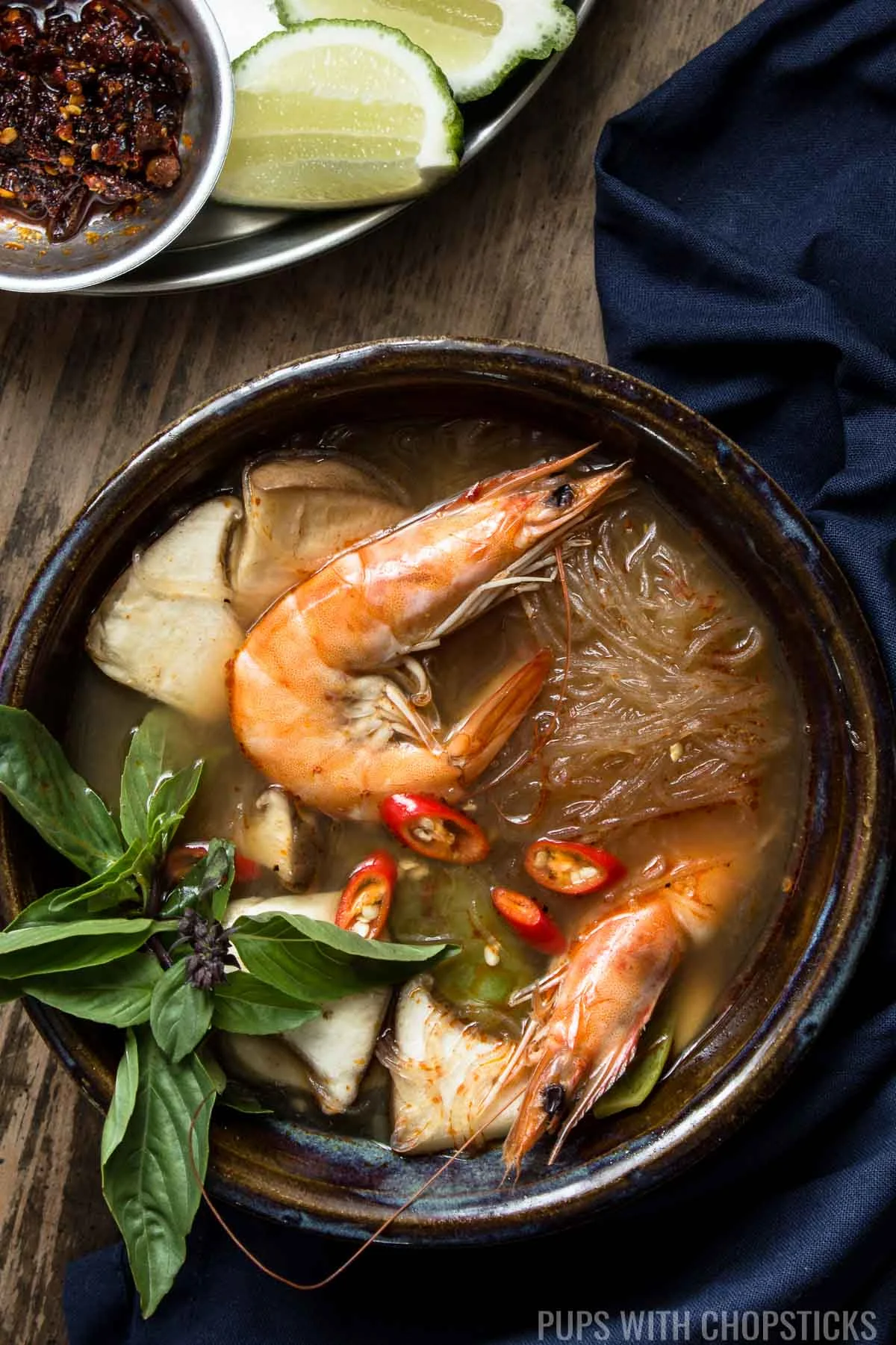
Table of Contents
- What is Tom Yum Soup?
- Why You’ll Love This Tom Yum Soup Recipe
- Ingredients You’ll Need to Make Tom Yum Soup At Home
- How to Make Tom Yum Soup (Step by Step)
- Joyce's Tips For Making the Best Tom Yum Soup Every Single Time
- Serving Suggestions
- Recipe Variation Ideas for Tom Yum Soup
- More Thai Recipes You May Like
- FAQs
- How to Store Leftover Tom Yum Soup
- Did You Make This Tom Yum Soup Recipe?
- Recipe Card
Tom yum soup is a classic Thai dish that is loved by many for its bold and complex flavors and features the perfect blend of spicy, sour, sweet and savory notes.
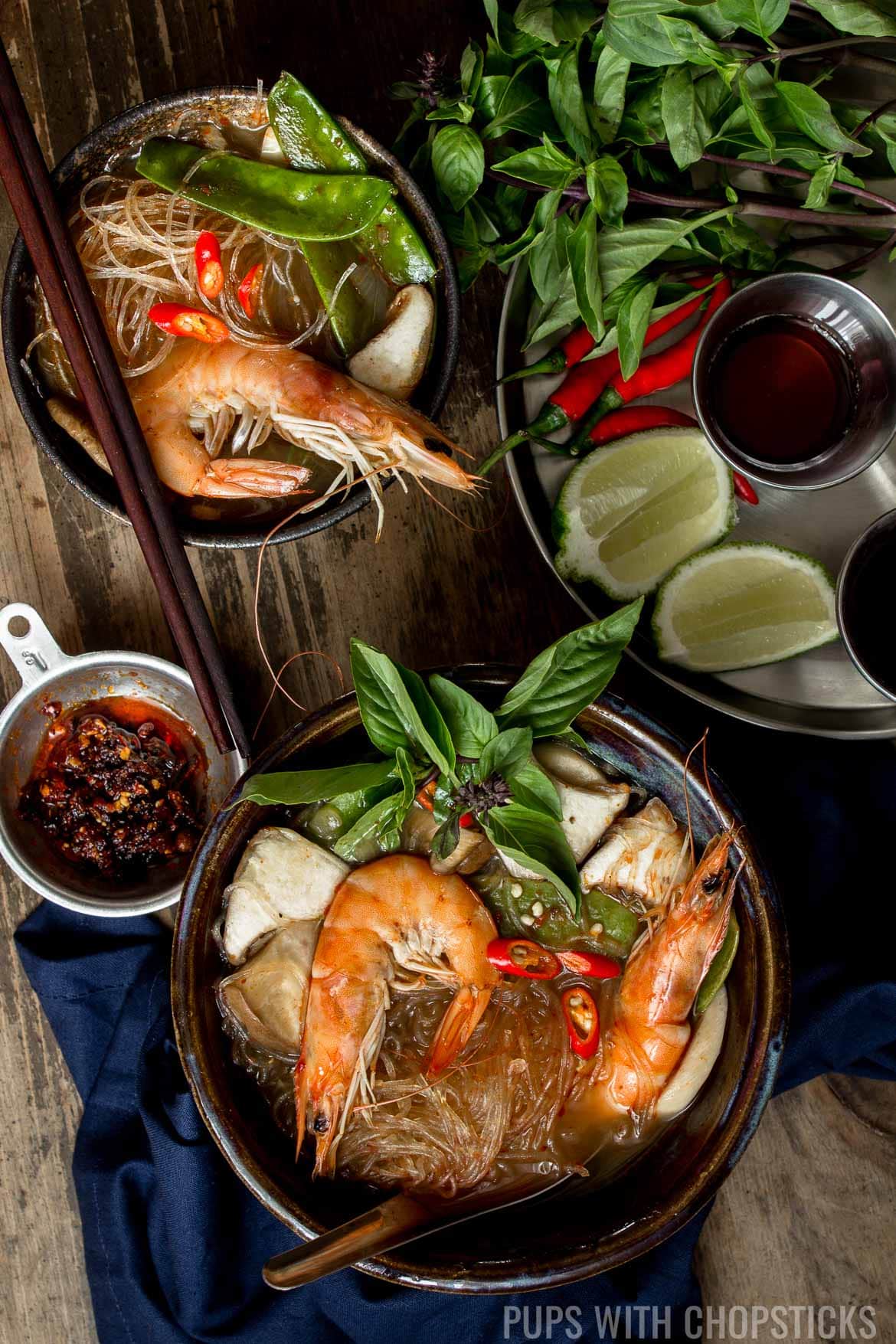
And what’s best is that my recipe is for a tom yum goong soup which is essentially a shrimp tom yum soup featuring delicious fresh ingredients such as vegetables, mushrooms, snow peas, lemongrass, fresh lime juice, glass noodles, and of course, shrimps.
The secret to the perfect tom yum soup is all about a careful balance of ingredients for that authentic touch. The aromatic blend of lemongrass, kaffir lime leaves, galangal, and Thai chilies infuses the broth with a refreshing citrusy fragrance that you’re going to fall in love with.
Plus, the magic of tom yum soup lies not only in its aromatic broth but also in the richness of its seafood. My recipe features shrimp, and the combination is absolutely delicious. You’ll end up with the tastiest tom yum soup you’ve ever had, I’m sure of it.
While traditionally a hot and spicy soup, it can be customized so as to suit your taste preferences. Whether you prefer a milder version or an extra fiery kick, this soup can easily be adjusted.
So, whether you’re a fan of Thai cuisine or simply looking to explore new flavors, Tom yum soup is a must-try dish that will transport you to the vibrant streets of Thailand.
Read on to learn exactly how to make this delicious tom yum soup recipe today!
What is Tom Yum Soup?
Tom yum is a popular Thai soup that is known for its bold flavors. It is typically made with a combination of ingredients such as Thai chili peppers, lemongrass, galangal, kaffir lime leaves and shrimp or chicken.
My recipe is essentially for a delicious variation of tom yum soup known as tom yum goong soup. It’s the same classic tom yum soup but made with shrimp. It’s loaded with classic ingredients like lemongrass and kaffir lime leaves and has the perfect blend of salty, sour, and sweet flavors.
One of the main reasons why this soup is so popular is thanks to its complex and harmonious taste combo. The combination of spicy, sweet, salty, sour, and tangy flavors creates a unique flavor profile that’s unique to this classic soup. It’s also known for its aromatic qualities, thanks to the fragrant herbs and spices used in its preparation.
Traditionally, tom yum soup is not served with mung bean glass noodles but I love adding it in because the noodles absorb some of the soup and it's always fun to slurp up springy noodles in soup.
To make this a vegan or vegetarian version, you can simply skip adding in the shrimp or substitute the shrimp with tofu.
If you're looking for a creamy version of this soup, then try Tom Kha (or Tom Kha Gai, which has chicken) which is the sister version of this delicious dish. Tom kha has the same base as tom yum with the addition of coconut milk.
Why You’ll Love This Tom Yum Soup Recipe
Easy to Make: It is incredibly simple and straightforward, making it perfect for beginner cooks or those short on time. With clear and concise instructions and easily available ingredients, anyone can whip up a delicious bowl of tom yum soup in no time.
Versatile Flavors: This recipe allows for customization, making it suitable for a variety of taste preferences. Whether you prefer a spicier or milder version, you can easily adjust the heat level by adding more or less chili.
Deliciously Tangy: The key to a great Thai soup lies in a perfect balance of sweet, sour and salty flavors, and this recipe achieves just that. The combination of classic ingredients will give you that delicious authentic tang!
Healthy and Nutritious: It is also packed with nutritious ingredients such as mushrooms, snow peas, and fresh lemongrass, which provide essential vitamins and minerals. Plus, the use of lean protein, such as shrimp, adds a healthy boost to the dish.
A Crowd-Pleaser: Whether you are hosting a dinner party or simply cooking for your family, this tom yum soup recipe is guaranteed to impress.
Ingredients You’ll Need to Make Tom Yum Soup At Home
All you need are some incredibly simple, pantry-staple ingredients to make this delicious tom yum soup recipe at home.
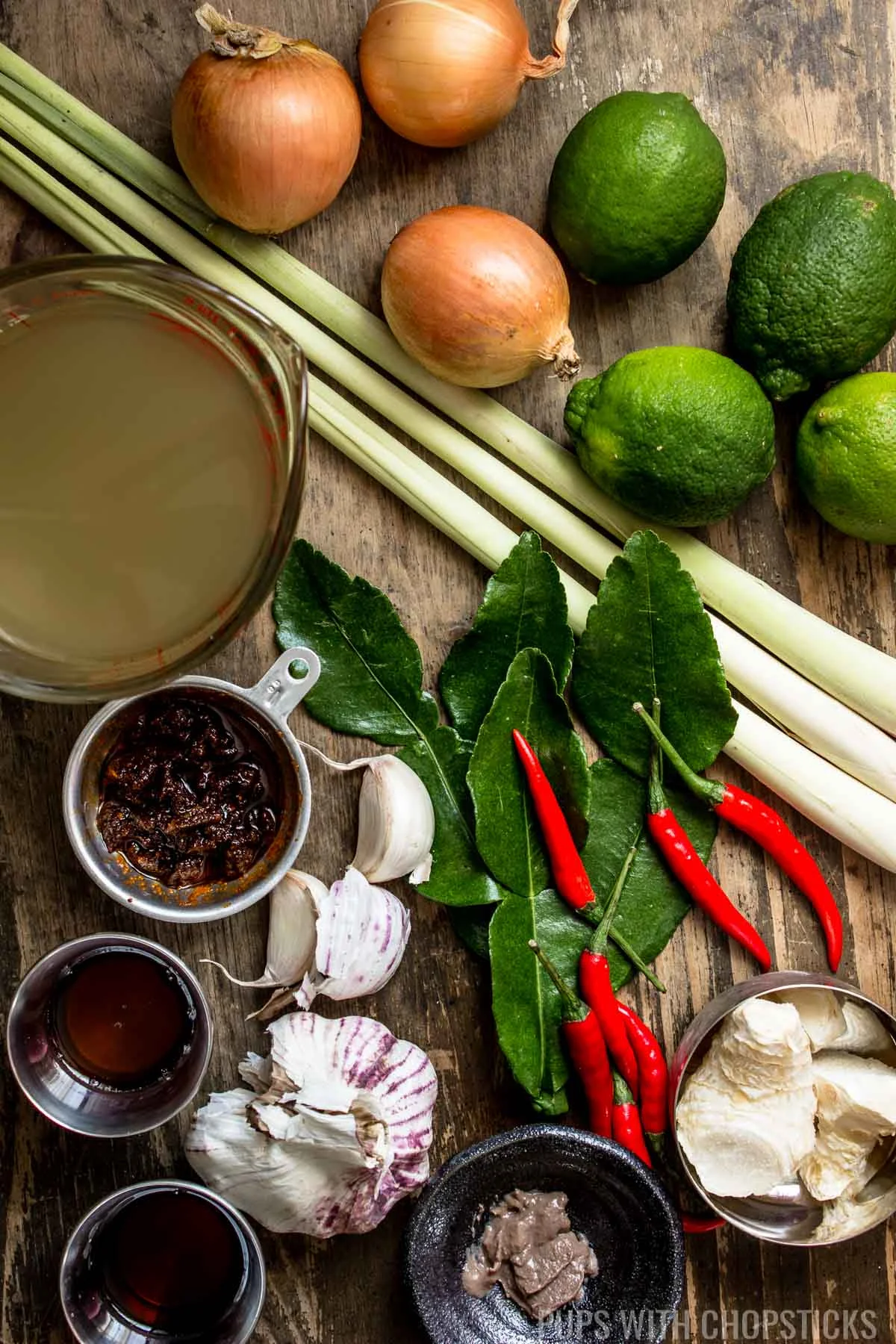
Here's an overview of the specific ingredients for this recipe. For the exact ingredients and measurements, please scroll to the recipe card below.
For the Tom Yum Soup Base:
- Broth: We will need low-sodium broth, preferably chicken, vegetable, or seafood to make this recipe. It will serve as the flavorful base for the soup and provide a rich and savory taste, enhancing the overall flavor of the dish.
- Water: Adding water will help to dilute the soup base and create the desired consistency. It will also help to blend all the flavors together.
- Lemongrass: For this recipe, you will also need fresh lemongrass stalks. Do not use pre-ground lemongrass, because it is very difficult to strain out from the soup. I also don't recommend using lemongrass powder for this soup.
- Kaffir Lime Leaves: These leaves have a strong fresh citrus aromatic flavor and scent. You can usually find fresh ones at an Asian grocery store or online. I personally think it is very difficult to substitute so if you can't find it, then add an extra stalk of lemongrass instead.
- Galangal: Galangal has a fresh pine-needle flavor and scent. If you cannot find it, omit it. Do not substitute it with ginger since it has a completely different flavor.
- Onion: We will need an onion to make this recipe. It’ll add a subtle and sweet taste to the soup and provide an aromatic base to it.
- Garlic: Adding chopped garlic will enhance the overall flavor of the soup and give it that delicious subtle garlic flavor.
- Bird’s Eye Chili (Optional): We will need bird's eye chili to make this recipe, adding a spicy and fiery kick to the soup. It will provide a bold and intense flavor for those who enjoy it. Keep in mind that Thai chili paste alone is very spicy. You can omit the birds' eye chili if you don't want your soup overly spicy.
For the Tom Yum Soup Flavoring:
- Nam Prik Pao (Thai Chili Paste): I found it very difficult to find Thai Chili Paste (Nam Prik Pao), especially if you don't know how to read Thai because most of the jars do not actually say 'Nam Prik Pao' and instead they all said Chili Paste or Chili Paste with Oil. When you are shopping for it at the Asian grocery store, look for something that says Chili Paste in Oil or Chili Paste and read the ingredients. You want to see tamarind in there, and you want to see the word shrimp/fish sauce/anchovy, and you want to see the word chilies. It should be a dark brown color as well. Some might have oil, and some might not.
- Lime Juice: Adding lime juice will add a tangy and citrusy note to the soup and provide a refreshing and bright flavor which will balance out all the other ingredients. Make sure to use fresh lime juice, and not the bottled one.
- Fish Sauce: We will also need some fish sauce to make this recipe. It will add a savory and umami taste to the soup and enhance the overall depth and richness of the dish.
- Sugar: We need to add sugar to this recipe to balance out the flavors of the soup and help to mellow out any excessive spiciness and give it that authentic flavor.
Foods to Add:
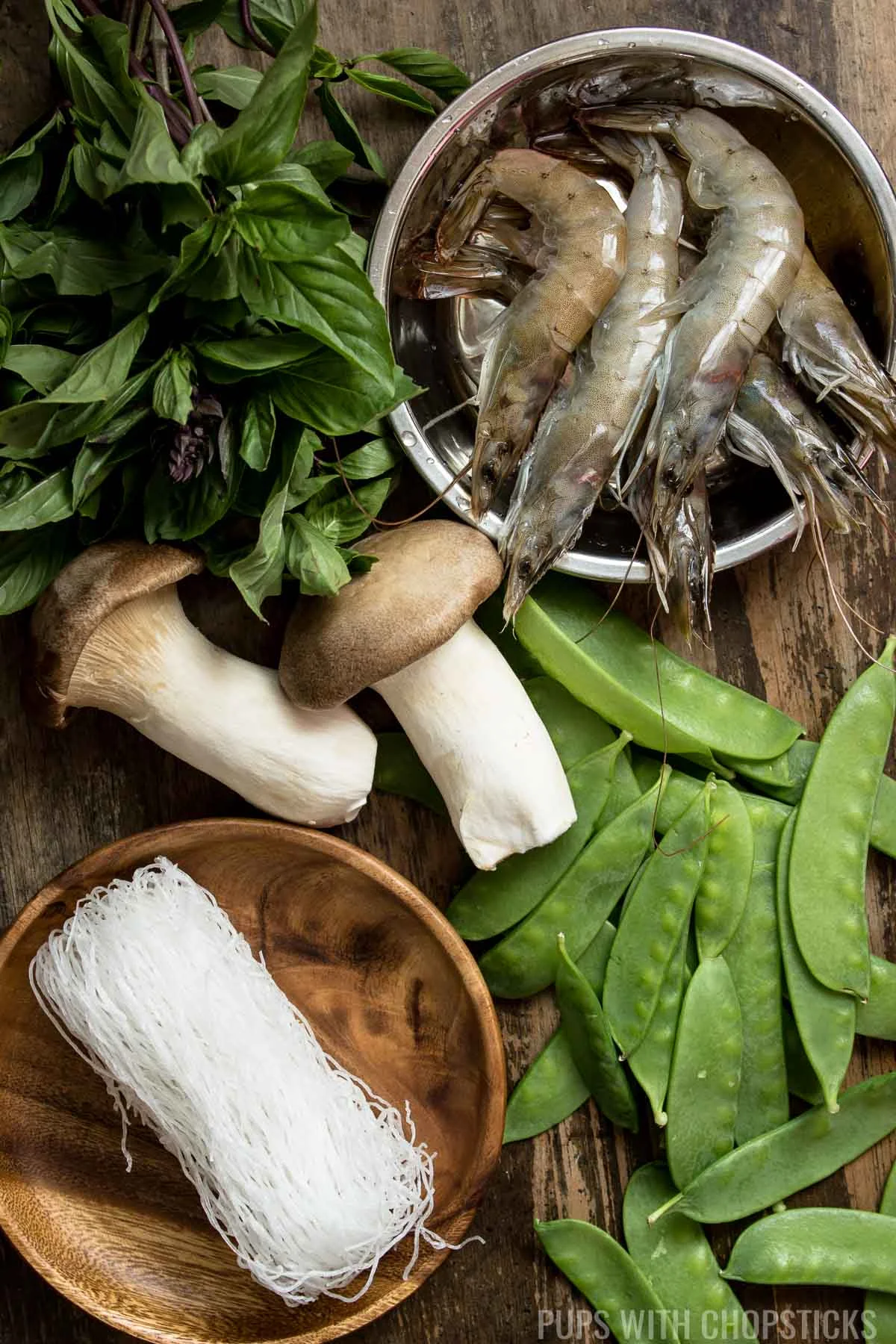
- Whole Shrimp: We will also need whole shrimp to make this recipe. It will provide a delicate flavor as well as serve to add a protein source and delightful texture to the soup.
- Dried Bean Thread Noodles: Adding dried bean thread noodles will give a satisfying texture to the tom yum soup. It will soak up the flavors of the broth and provide a filling element.
- Mushrooms: We will also need mushrooms to make this recipe. They can be cremini or white. They will add an earthy taste to the soup and provide a satisfying texture which will enhance the overall flavor profile. I also like adding shiitake mushrooms for extra flavor.
- Snow Peas: Use some snow peas to add a crisp and refreshing touch to the soup. They will provide a vibrant color and a fresh taste to the dish.
Additional Ideas for Foods to Add (Pick and Choose):
- Green Vegetables: You can also add your favorite green vegetables. Choy, and peppers work great.
- Tomato: Another option is to add fresh tomato by cutting it into chunks and adding at the end. It’ll provide a bright and refreshing taste to compliment the other ingredients.
- Pineapple Chunks: You can also add some fresh pineapple chunks cooked during the shrimp cooking step. They’ll add a burst of sweetness to the soup.
How to Make Tom Yum Soup (Step by Step)
Making this incredible tom yum soup recipe at home is super easy and will give you great results every single time. Here's how to make it step by step:
Prepare everything ahead of time
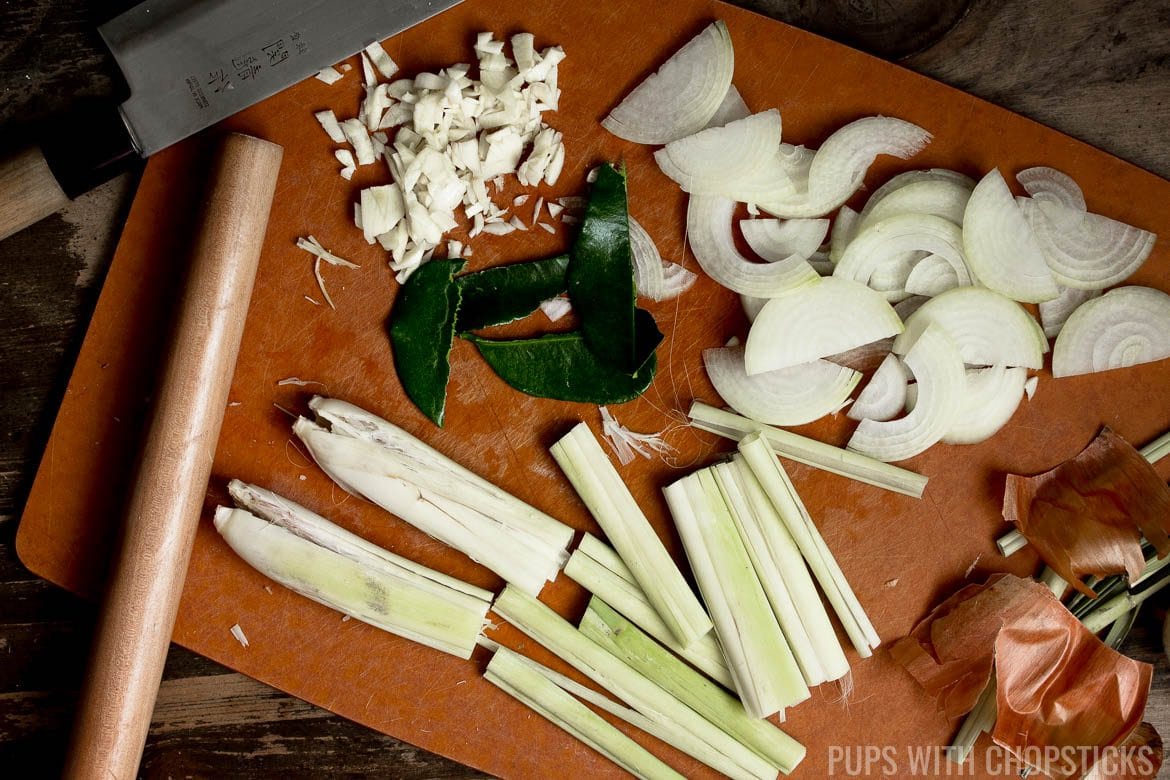
Lemongrass is super flavorful but most of the flavors don't come out unless you break it up a bit to release its oils. This rule applies to most fresh herbs. So I like to usually rip my herbs before I use them but because lemongrass is thick and tough, the best way to release its oils is to smash it! You'll know it's good when you can smell it.
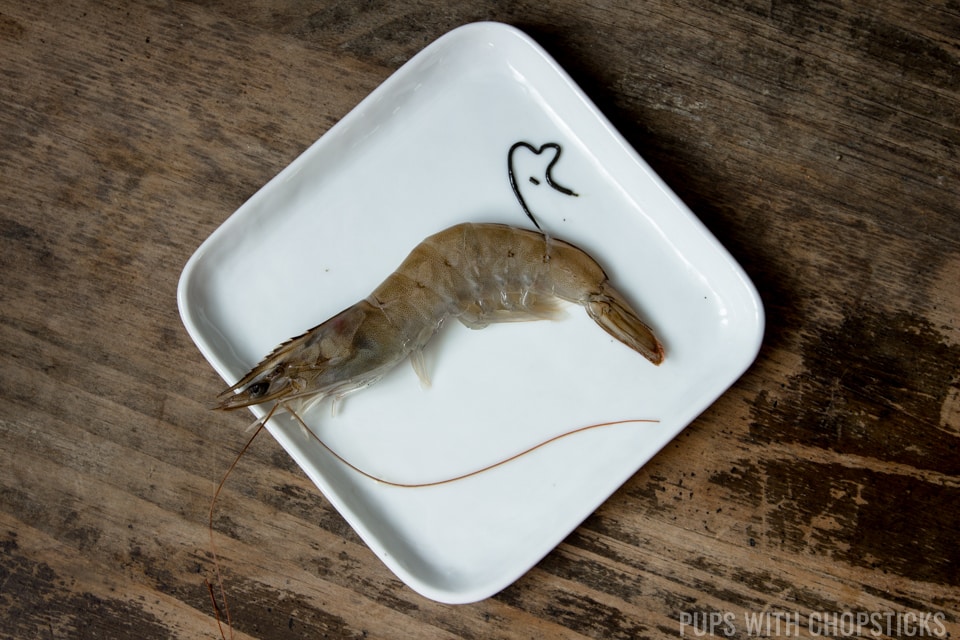
Devein the Shrimp (Optional)
I personally do not think you have to devein shrimp but this is a personal preference and some do prefer to devein their shrimp before eating it. If you want to devein your shrimp before you use it, I have a guide on how to Devein Shrimp in Seconds using a toothpick! Head on over to that post if you want to read how I quickly devein my shrimp at home when I need to!
Make the Soup, and Discard the Aromatics
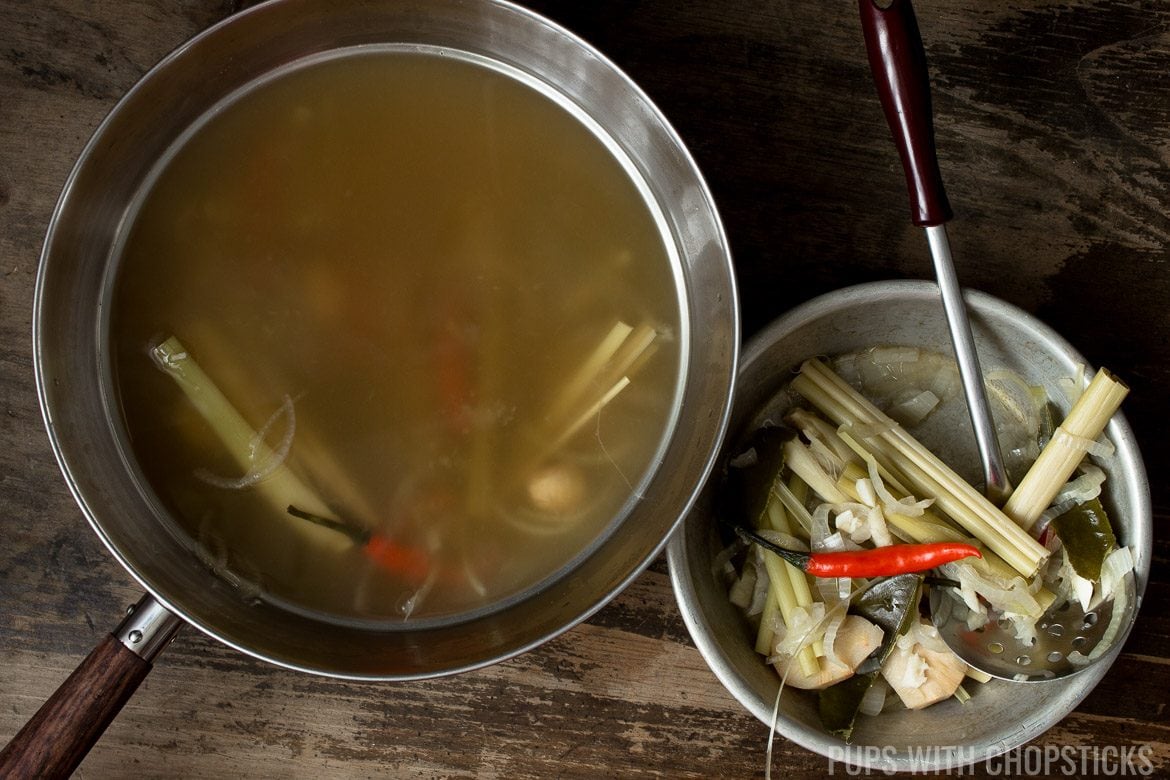
Once the broth is done, discard the aromatics - Before you serve the tom yum goong soup, fish out the kaffir lime leaves, lemongrass, and galangal. They are tough to chew and are not meant to be eaten - it's only used to flavor the broth
Turn Off the Heat Before You Season the Soup
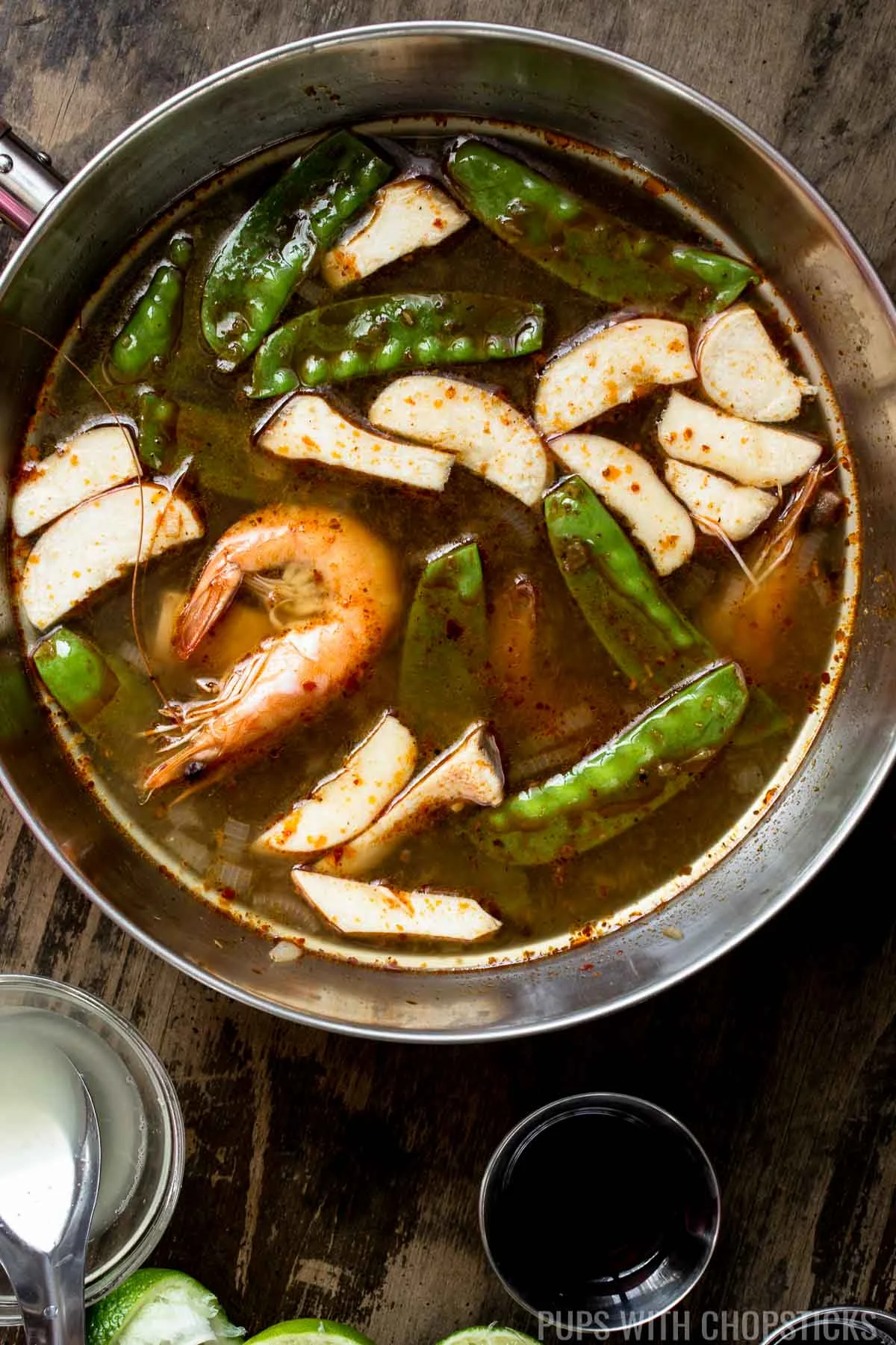
To make sure the soup is flavored exactly the way I want it, I add my salty, sweet, and sour flavors at the very end when the heat is off. I find that if you keep the heat on while you put the lime juice in, it cooks away all the lime oils and makes it taste less flavorful.
I like my soup slightly more on the spicy salty side, some people might like it a lot more sour - so I provided a guideline for the final flavoring but it is crucial to taste test at the end and adjust this to your liking.
Joyce's Tips For Making the Best Tom Yum Soup Every Single Time
Prep the Ingredients Beforehand: Before you begin, make sure to prep all your ingredients. This will help you stay organized and make sure that you have everything ready when you need it.
Use Fresh Ingredients: This soup is all about the fresh flavors, so it is important to use fresh ingredients. These include lemongrass, kaffir lime leaves, and Thai chilies.
Don’t Overcook the Shrimp: Shrimp cooks very quickly, so be careful not to overcook it. Add the shrimp to the soup towards the end of the cooking process and cook just until it turns pink and opaque. Overcooked shrimp can become tough and rubbery.
Adjust the Spice Level: Depending on what brand of chili paste (Nam Prik Pao) you buy, they come with varying spiciness level. Add the chili paste ½ a tablespoon at a time doing a taste test each time until it is the right amount of spiciness for you.
Save Extra Ingredients: If you have extra fresh kaffir lime leaves, lemongrass, or galangal, you can store them in the freezer in a Ziploc bag for a few months
Thaw Frozen Shrimp: If you are using frozen shrimp, make sure you thaw it completely before cooking it. It is very easy to overcook shrimp if it is still frozen.
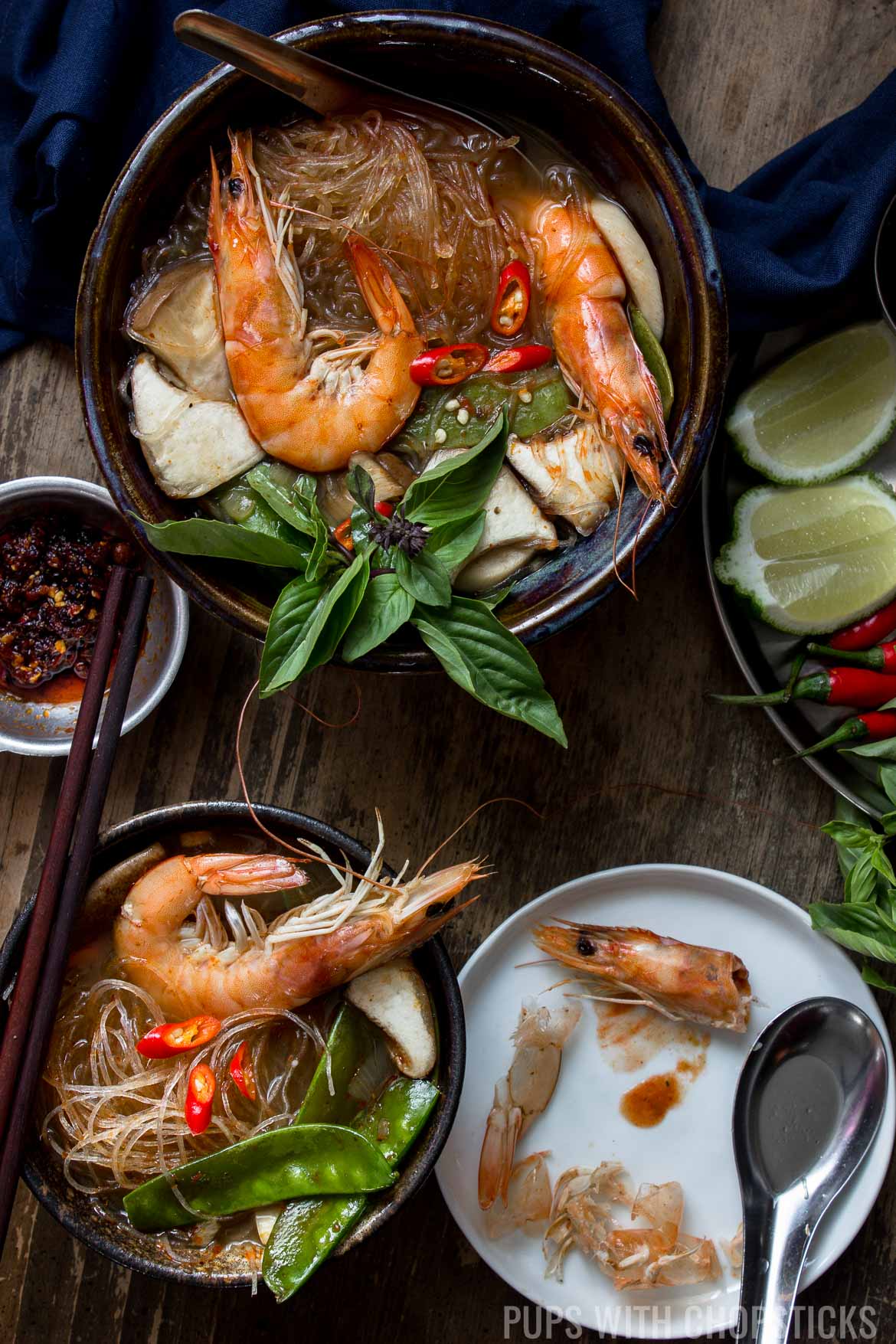
Garnish with Fresh Herbs: Just before serving, garnish the soup with fresh herbs like cilantro and Thai basil. These herbs add a burst of freshness and brighten up the flavors of the soup. You can also squeeze some fresh lime juice over the soup for an extra twist.
Serving Suggestions
- Serve as an appetizer before a Thai-inspired meal like Pad Thai or Pad Woon Sen (Thai Glass Noodle Stir-Fry). Its vibrant flavors and aromatic spices are absolutely delicious and will set the stage for the rest of the meal.
- Pair with steamed jasmine rice or glass noodles for a more substantial main course. The soup’s tangy and spicy broth will compliment the mildness of the rice or noodles, creating a balanced and delicious meal.
- Serve with a side of fresh herbs, such as cilantro, Thai basil, and mint. These herbs can be added to the soup to enhance its flavors or used as a garnish to provide a pop of color and freshness.
- Accompany the soup with a plate of crispy fried fish or shrimp. The crunchy texture of the fried seafood will contrast with the soup’s broth, providing a delightful combination of textures and flavors.
- Enjoy with a side of Thai spring rolls or dumplings. The soup’s spicy and tangy flavors will compliment the savory fillings of the spring rolls or dumplings and serve to create a delicious pairing.
- Serve it with grilled meats like Lemongrass Chicken, Thai Chicken Satay or Grilled Coconut Chicken Skewers at a BBQ. The tangy flavors help cut the greasiness from heavy grilled meats, but also still complement the common Thai spices from the meat marinades beautifully.
Recipe Variation Ideas for Tom Yum Soup
This delicious tom yum soup recipe is so flavorful and easy to make, you'll want to try out some of these delicious variations! Here are some great ideas:
- Vegetarian: For a vegetarian twist, omit the shrimp and replace it with tofu for a hearty and flavorful vegetarian option. Other ingredients such as lemongrass, lime leaves, and chili can remain the same to maintain the traditional taste.
- Seafood: To make a seafood version, add a variety of seafood such as shrimp, squid, and mussels to the soup. This serves to add a delightful and oceanic flavor to the soup, perfect for seafood lovers.
- Chicken: Replace the shrimp with chicken and add chicken broth for a chicken-based variation. This is a great option for those who prefer chicken over seafood.
- Creamy: If you're looking for a creamy version of this soup, then try Tom Kha (or Tom Kha Gai, which has chicken) which is the sister version of this delicious dish. Tom kha has the same base as tom yum with the addition of coconut milk.
- Extra spicy: For those who enjoy a spicy twist, add extra chili peppers or chili paste to the soup. This will make the soup extra spicy and delicious!
More Thai Recipes You May Like
- Pad Thai
- Yum Woon Sen (Thai Glass Noodle Salad)
- Easy Tom Kha Gai Soup (Thai Coconut Chicken Soup)
- Easy Thai Peanut Satay Sauce
- Pad Woon Sen (Thai Glass Noodle Stirfry)
- Thai Basil Turkey Fried Rice
- Grilled Thai Coconut Chicken Skewers
- Easy Khao Soi (Thai Coconut Curry Noodle Soup)
- Creamy Thai Red Curry
- Thai Peanut Sauce (From Scratch)
- Thai Meatballs
- Thai Basil Chicken (Pad Krapow Gai)
FAQs
The only difference between the two is, tom yum goong has shrimp. The literal translation to 'goong' in Thai is shrimp.
The main difference between tom yum and tom kha is, tom kha has coconut milk in it which makes it creamier.
Yes, you can make the soup vegetarian by using vegetable broth and omitting the shrimp. You can also add tofu or other vegetarian protein sources to make it more filling.
The level of spice can vary depending on the amount of chili peppers used and the type of chili paste you get your hands on. By default, it is a spicy soup, but you can adjust the heat level by adding more or less chili peppers according to your preference.
It is best enjoyed fresh, but you can opt to make it in advance and store it in the refrigerator. However, keep in mind that the flavors may intensify over time, so you may need to adjust the seasoning before serving.
How to Store Leftover Tom Yum Soup
To store leftovers, begin by transferring the soup into an airtight container. Place the container in the refrigerator and make sure that it is stored within two hours of cooking. The soup can be kept in the fridge for up to four days.
When it comes to reheating, simply pour the desired amount of soup into a saucepan and heat it over medium heat until it reaches a simmer. Stir occasionally to guarantee even heating.
Alternatively, you can reheat individual portions in the microwave, stirring halfway through to promote even heat distribution.
If you want to freeze the leftovers, it is important to note that this soup may not freeze well due to the delicate nature of its ingredients. The herbs, spices, and shrimp can lose their texture and flavor when frozen and thawed.
Therefore, it is generally not recommended to freeze tom yum soup. It is best to enjoy it fresh or consume the leftovers within a few days of cooking.
Did You Make This Tom Yum Soup Recipe?
If you made this tom yum soup recipe, I want to see! Follow Pups with Chopsticks on Instagram, snap a photo, and tag and hashtag it with @pupswithchopsticks and #pupswithchopsticks. I love to know what you are making!
If you like my recipes and want to be updated on when new ones come out, please consider subscribing to my newsletter (we don't spam) and follow along on Instagram, Facebook, and Pinterest for all of my latest recipes!
Recipe Card
Thai Tom Yum Soup (Thai Hot and Sour Soup)
Joyce's Recipe Notes
- When shopping locally for Nam Prik Pao, there might not be a lot of brands that have English on it and the majority of them will not say 'Nam Prik Pao' on the label in English. Look for jars that say 'Chili Paste' or 'Chilli Paste in Oil'. It should contain tamarind, shrimp/anchovy/fish sauce, and chilies in the ingredients list.
- Depending on what brand of chili paste (Nam Prik Pao) you buy, they come with varying spiciness level. Add the chili paste ½ a tablespoon at a time doing a taste test each time until it is the right amount of spiciness for you.
- Galangal has a fresh and pine-needle flavor and scent and is hard to substitute. If you cannot find it, omit it. Do not substitute it with ginger since it has a completely different flavor.
- Use fresh lemongrass stalks. Do not use pre-ground lemongrass because it is very difficult to strain out from the soup. I also don't recommend using lemongrass powder for this soup.
- If you cannot find kaffir lime leaves, add an extra stalk of lemongrass instead.
- Thai chili paste alone is very spicy. If you don't want your soup overly spicy, you can omit the birds' eye chili.
- If you have extra fresh kaffir lime leaves, lemongrass, or galangal, you can store them in the freezer in a Ziploc bag for a few months
Ingredients
Tom Yum Soup Base
- 900 ml low sodium broth (approx. 4 cups, chicken, vegetable, or seafood)
- 1 cup water
- 2 stalks lemongrass (smashed and cut into chunks)
- 8-10 kaffir lime leaves
- 2 inch galangal (sliced)
- 1 medium onion (roughly chopped or sliced)
- 2 cloves garlic (smashed and roughly chopped)
- 1 birds eye chili (optional, see notes above)
Tom Yum Soup Flavoring (Use These at the End)
- 1 tablespoon Thai Chili Paste (Nam Prik Pao, see notes above)
- 2-3 limes (¼ cup of lime juice, add more to adjust to taste)
- 3 tablespoons fish sauce (add more to adjust to taste)
- 3 ½ teaspoon sugar (add more to adjust to taste)
Foods to Add
- 6-8 whole shrimp (fully thawed if using frozen)
- 75 g dried bean thread noodles (1 bundle, soaked in room temperature water)
- 1 handful mushrooms (cremini or white)
- 1 handful snow peas (tips removed)
Additional Ideas for Foods to Add (Pick and Choose)
- any type of green vegetable (choy, peppers etc.)
- fresh tomato (cut into chunks and added at the end)
- fresh pineapple chunks (cooked during the shrimp cooking step)
- Thai basil (as a fragrant garnish)
Instructions
Preparation
- (Optional if Adding Glass Noodles) Soak the glass noodles in room temperature water for 10 minutes and then drain and set aside.
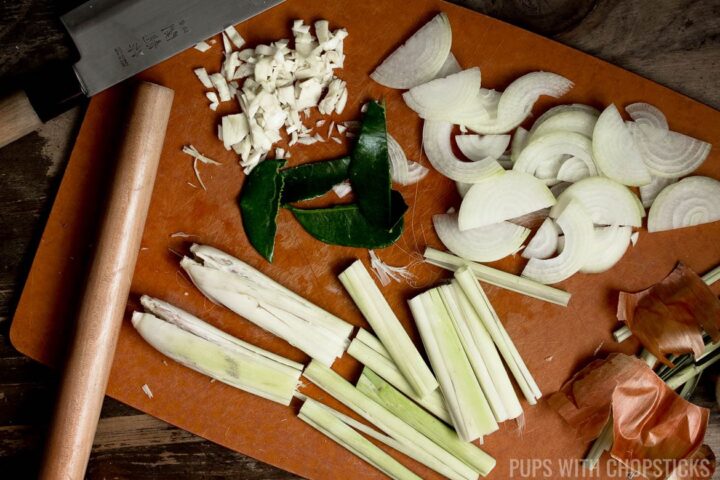
- Remove the first layer of the lemongrass and cut them into large chunks. Use the back of your knife or something blunt like a rolling pin to smash it to release the oils.
- Slice the onions and roughly chop the garlic and set it aside.
- Slice the galangal and place it in the pot

- Cut the vegetables and mushroom into bite-sized pieces and set aside
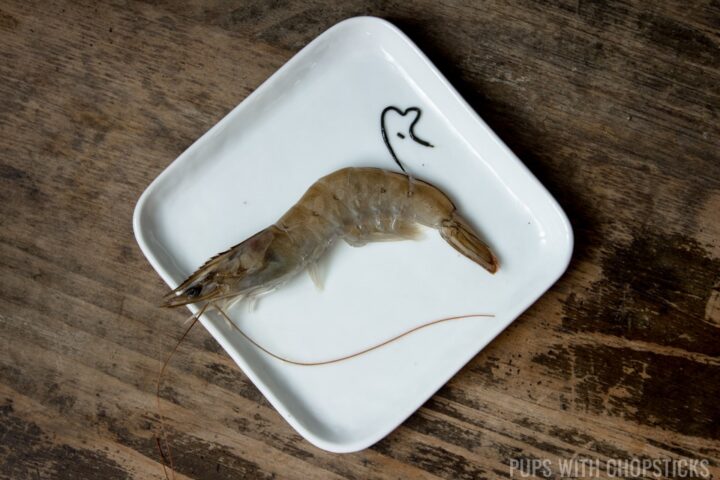
- If you are using frozen shrimp, thaw it before using it. Peel the shrimp and remove the head but keep the tail on. Set the shells aside for later.Alternatively, you can keep the heads and shells on as well.(Optional) Devein the shrimp and set aside
- (Optional) If you are using chilies, cut the chilies in half and set them aside.
Making the Tom Yum Soup Base
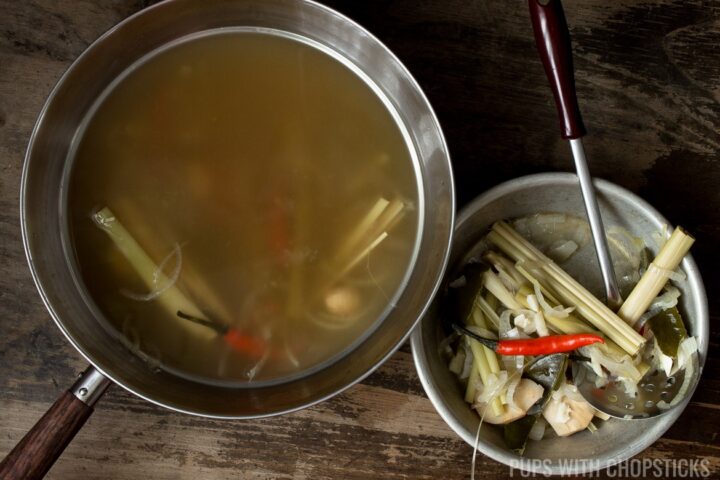
- Rip the kaffir lime leaves in half and place it in the soup pot.
- Place the lemongrass, onions, galangal, and garlic into the pot.
- If you have shrimp skin and shrimp heads, add that to the pot as well.
- Add the broth and water into the pot and set the pot on medium-high heat until it starts to boil
- Once it starts to boil, adjust the heat to low heat and put a lid on it. Simmer it for 30 minutes
Putting It Together
- Once 30 minutes is up, taste the broth. It shouldn't have any saltiness to it, but it should have some citrus flavor from the lemongrass and lime leaves. If it doesn't, cook it for another 10-15 minutes.
- Once you have finished cooking the broth, remove all the aromatics, shrimp skin, and shrimp head. They are not meant to be eaten, only to flavor the soup.
- Turn the heat back up to medium
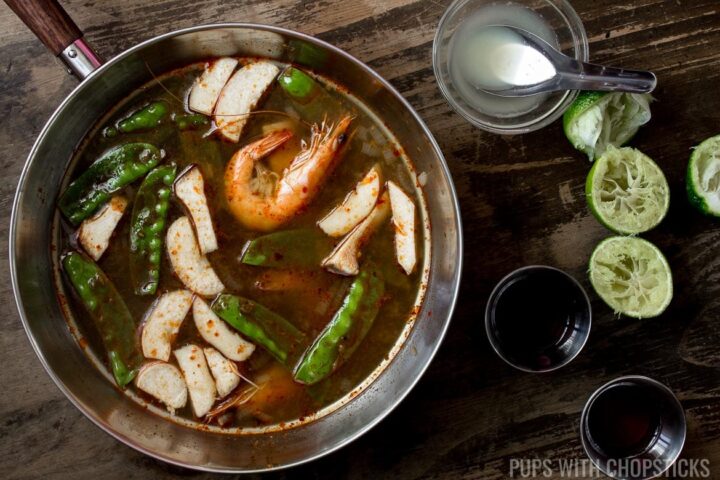
- Add the chili paste ½ tablespoon at a time, and do a taste test to make sure it is not too spicy. Add up to 1 ½ tablespoons, until it is the right amount of spiciness for you.
- Put in the vegetables and mushrooms and cook them for 1-2 minutes.
- Add in the shrimp and cook it for 1-1 ½ minutes. Shrimp cooks very quickly, as long as it is fully thawed.
- Turn off the heat
- Add in the fish sauce, lime juice, and sugar. Stir and taste. Adjust it to your liking. (Add more lime juice if you like it tart etc)**Adding the lime juice and fish sauce in after the heat has been turned off, retains the flavor better.
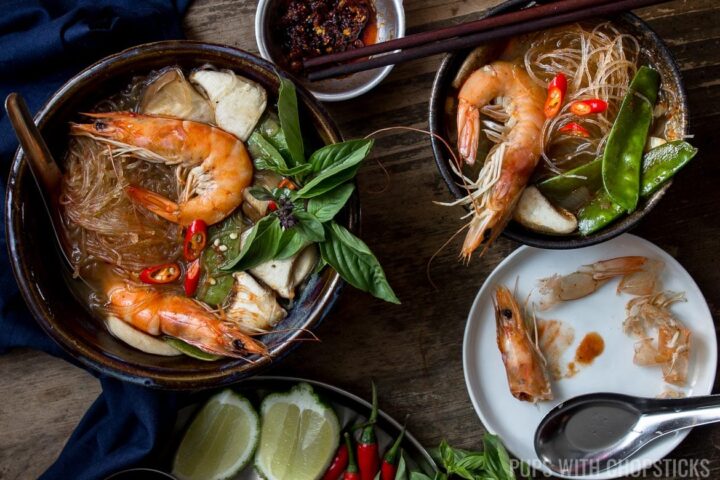
- If you are using glass noodles, add them to the pot of soup and let them cook for about 30 seconds to 1 minute.
- Ladle it into a bowl and enjoy! 🙂
Nutrition
*Nutritional information is calculated using online tools and is an estimate*
Disclaimer: We are a participant in the Amazon Services LLC Associates Program, an affiliate advertising program designed to provide a means for us to earn fees by linking to Amazon.com and affiliated sites. While I appreciate the support - please try to buy your items locally if possible to support your local shops (chances are they are cheaper locally as well!) 🙂
Makos says
This soup is to die for! LOVE LOVE LOVE the photos!!!
Joyce says
Aw thanks Makos! 🙂
Jossie says
What a delectable recipe of noodle and soup mix ! Yummy Yummy !, I really love it. Thank for reminding me and I couldn't wait to make one.
Joyce says
I almost forgot about this recipe too! Something about this cold weather really makes me run to comfort foods my dad used to make 🙂
Scruff says
Hi Joyce! I love your website!!! You photos are absolutely fantastic! When I read this post it reminded me of my favourite 2 minute noodle flavour MAMA Tom Yum. I am sure yours is 10x better and will definitely give it a go soon. Thanks for the recipe.
Joyce says
Hi Scruff!
That's hilarious! I love that instant noodle flavor from MAMA! 🙂 I was actually eating that when I remembered my dad making tom yum goong for me as a kid so it inspired me to post this recipe! 🙂 Thank you for your super duper kind words. It means a lot to me. 🙂
Joyce